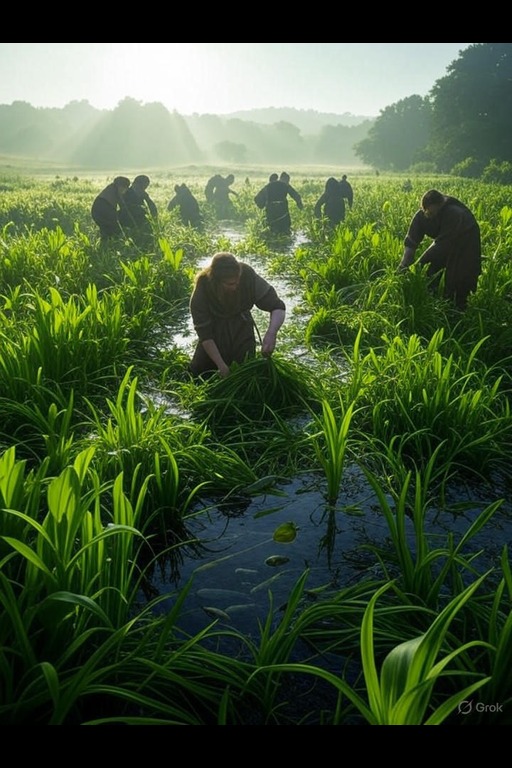
Eel Grass (Fresh) thrives in the tranquil depths of freshwater environments, forming lush underwater meadows that serve as vital habitats for various aquatic life. Its resilient nature makes it a reliable resource for local harvesters who depend on skill and timing to gather it sustainably. This versatile plant supports numerous industries, particularly in culinary and trade applications. As settlements often develop near abundant sources of Eel Grass, it becomes integral to regional economies and cultural practices.
Universal
Biomes
Politics
Alignments
Races
Resources
Classes
Elevations
Religions
World
No accessible MAPs found.
Biome
Politics
Alignment
Race
Resource
Class
HeightMap
Eel Grass (Fresh)
Detailed Description
Eel Grass (Fresh) is a submerged aquatic plant characterized by its long, ribbon-like leaves that sway gracefully in the flow of freshwater currents. Preferring shallow waters, it forms dense beds that not only provide shelter and food for fish and invertebrates but also help stabilize the sediment on the bottom. Its ecological importance cannot be overstated, as these grasslands contribute to the health of freshwater ecosystems, supporting biodiversity and offering a nurturing ground for various species during their life cycles. The meadows serve as a natural filter, improving water quality as they absorb nutrients and trap sediments, making them essential for maintaining the balance of freshwater habitats. Harvesting Eel Grass requires a combination of knowledge and respect for the environment. Skilled gatherers observe seasonal changes and water conditions to determine the optimal times for collection, ensuring that the plant can regenerate and thrive. Techniques vary, with some using specialized tools to minimize disruption to the underwater ecosystem, while others rely on more traditional methods passed down through generations. Sustainable practices are emphasized, as overharvesting can lead to declines in Eel Grass populations, which in turn affects the many creatures that depend on it. Eel Grass holds significant value in various industries, most notably in culinary applications. Its leaves are often dried and ground into a flavorful seasoning, while preserves and trade packs made with Eel Grass are sought after for their unique taste and versatility. In addition, it can be processed into salts and spices that enhance dishes, offering a connection between the land and the water from which it is harvested. As communities recognize the importance of Eel Grass, it becomes not only a food source but also a cultural symbol of sustainability and harmony with nature, fostering a sense of identity and pride among those who rely on it. The trade of Eel Grass extends beyond local markets, with dried goods and specialty products finding their way into distant lands. This resource, therefore, not only supports the local economy but also facilitates exchanges and relationships between diverse communities. Its presence can often be seen as an indicator of a thriving freshwater ecosystem, making it a crucial component of both regional identity and environmental health.
Examples
Products derived from Eel Grass (Fresh) exemplify its versatile nature and culinary potential. Dried Eel Grass is frequently used as a seasoning, offering a unique flavor profile that elevates various dishes. In addition, preserves crafted from this aquatic plant are celebrated for their ability to retain the essence of the freshwater habitat. Trade packs containing Eel Grass products are common, facilitating commerce between regions. Furthermore, Eel Grass salts and spices have gained popularity, showcasing the resource's adaptability in both flavor and trade.