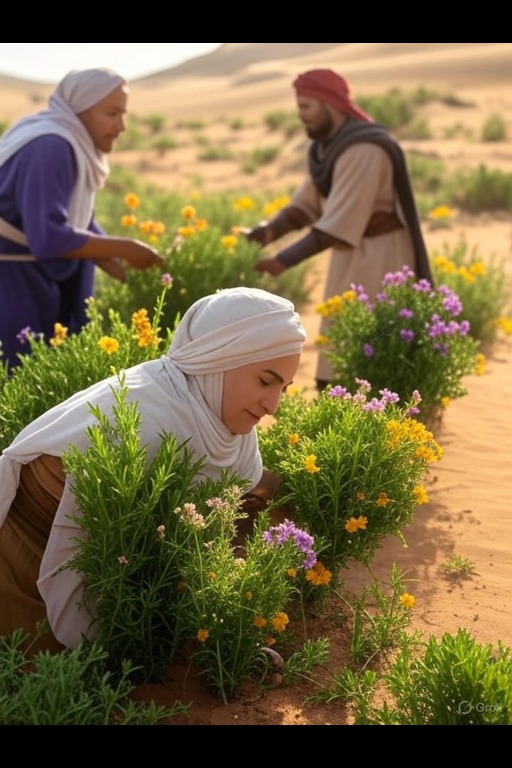
Desert Herbs are a vital resource found naturally in arid landscapes characterized by extreme temperatures and scarce water. These resilient plants are harvested by skilled gatherers who understand the delicate balance necessary to maintain their populations. Supporting various industries, they are integral to local crafts and trade, with settlements often established near abundant sources. Their versatile applications in herbalism, culinary arts, and medicine contribute to their importance in the region’s economy.
Universal
Biomes
Politics
Alignments
Races
Resources
Classes
Elevations
Religions
World
No accessible MAPs found.
Biome
Politics
Alignment
Race
Resource
Class
HeightMap
Desert Herbs
Detailed Description
In the unforgiving environment of hot deserts, Desert Herbs thrive by adapting to the harsh conditions. These hardy plants exhibit remarkable resilience, often storing moisture in their leaves or roots to survive prolonged dry spells. Their ability to flourish in nutrient-poor soil makes them a unique asset for both local inhabitants and traders who venture into these remote areas. Harvesting these herbs requires not only skill but also an intimate knowledge of the seasonal cycles that govern their growth, ensuring sustainable practices that do not deplete their populations. Gatherers often take only what they need, understanding that balance is crucial for the longevity of these resources. The applications of Desert Herbs are extensive. In the realm of herbalism, they are used to create soothing teas and potent tinctures that cater to various ailments, drawing on their natural properties to promote well-being. Culinary uses are equally diverse, with many herbs serving as flavorful spices or ingredients in traditional recipes, enhancing the palatability of local dishes. In the medical field, these plants have been utilized for centuries to produce salves and other remedies, providing communities with necessary healthcare options that align with their environment. The dried greens and spice sachets made from these herbs not only offer flavor but also serve as natural preservatives for food, a critical function in regions where preservation is paramount. Trade in Desert Herbs fosters connections between distant settlements, as skilled gatherers transport their harvest to markets where they exchange these valuable commodities for other goods. The knowledge surrounding these plants is often passed down through generations, creating a rich tapestry of lore and expertise that enhances their cultural significance. As such, Desert Herbs are more than mere resources; they embody the resilience and adaptability of life in harsh climates, serving as a testament to the ingenuity of those who rely on them. The flourishing trade and artistry surrounding these herbs reflect the deep bond between the people and their environment, ensuring the continuation of traditions tied to this vital resource.
Examples
Various products derived from Desert Herbs showcase their versatility and significance. Herbal teas made from these plants are enjoyed for their soothing qualities, while tinctures offer concentrated benefits for health. Salves created from the extracts provide relief for skin ailments, and dried greens serve as essential ingredients in local culinary creations. Additionally, spice sachets crafted from these herbs are beloved for their fragrant and flavorful contributions, making them sought-after items in trade.