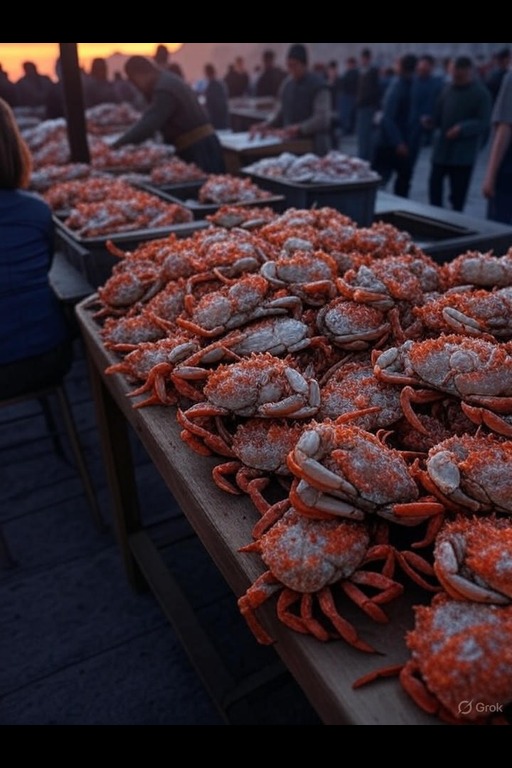
Crab Clusters (Wild) are a bountiful resource found in the vast expanse of the ocean. These clusters form naturally along coastal regions, providing sustenance and trade opportunities for nearby settlements. Harvesters must navigate the seasonal rhythms and employ their skills to collect them sustainably, ensuring the population remains healthy. The clusters play a vital role in local culinary traditions and trade networks, supporting a variety of industries.
Universal
Biomes
Politics
Alignments
Races
Resources
Classes
Elevations
Religions
World
No accessible MAPs found.
Biome
Politics
Alignment
Race
Resource
Class
HeightMap
Crab Clusters (Wild)
Detailed Description
Crab Clusters (Wild) emerge from the intricate ecosystems of the ocean, where they thrive in rocky crevices and tidal pools. These clusters consist of robust crustaceans, often bound together in groups, which provide a rich source of protein and flavor. The availability of crab clusters is heavily influenced by the changing tides and seasons, demanding that harvesters time their collections carefully. This relationship with nature encourages sustainable practices, as overharvesting can lead to diminished populations, ultimately threatening both local economies and the delicate balance of marine life. Due to their culinary versatility, crab clusters are highly sought after in various food preparations. They can be cooked fresh, dried for preservation, or transformed into flavorful preserves that capture the essence of the ocean. Local chefs and home cooks alike exalt the unique taste of these crustaceans, often incorporating them into traditional dishes or innovative recipes. Beyond their culinary uses, crab clusters hold economic significance, forming the backbone of trade in coastal regions. Trade packs containing dried goods, preserves, and even specialty salts made from the ocean's minerals are common, bolstering local commerce and connecting communities across distances. The process of harvesting crab clusters requires skill and knowledge of the sea. Gatherers often rely on traditional techniques passed down through generations, using specialized tools to carefully extract the clusters while minimizing harm to the surrounding environment. This intricate dance with nature not only reflects a deep respect for the marine ecosystem but also fosters a community’s cultural identity. As such, many settlements flourish near abundant sources of crab clusters, where fishing lore and culinary expertise converge to create a vibrant tapestry of life influenced by the ocean's bounty.
Examples
Crab Clusters (Wild) yield a variety of products that showcase their culinary potential and trade value. Dried crab is often utilized in soups and stews, imparting a rich umami flavor, while preserves crafted from these clusters can be enjoyed as a spread or garnish. Salt made from seawater, enhanced with crab flavors, provides a distinct seasoning for various dishes. Additionally, spice blends featuring dried crab are popular among local chefs, adding depth and complexity to their creations. Overall, the versatility of crab clusters fosters a thriving market with numerous applications in both local and distant trade.