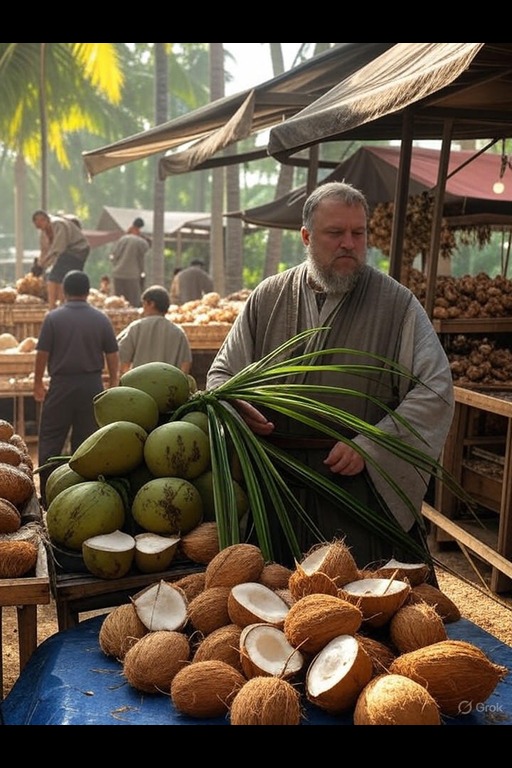
Coconut is a versatile resource cultivated in tropical wet forests, where the climate and soil contribute significantly to its growth. Traditional farming methods, influenced by the seasons, play a key role in determining the quality and yield of this crop. Surpluses of coconut are often traded with neighboring regions, as the resource is highly prized for its many uses. Caravans frequently seek preserved forms for long journeys and to ensure provisions during leaner seasons.
Universal
Biomes
Politics
Alignments
Races
Resources
Classes
Elevations
Religions
World
No accessible MAPs found.
Biome
Politics
Alignment
Race
Resource
Class
HeightMap
Coconut
Detailed Description
The cultivation of coconut is deeply intertwined with the environmental conditions of tropical wet forests. These regions, characterized by abundant rainfall and rich, well-draining soils, provide an ideal habitat for coconut palms to thrive. Farmers often employ traditional methods, relying on natural cycles such as monsoon seasons to optimize growth and harvest times. The interplay between these natural elements and human practices shapes the characteristics of the coconuts produced, affecting their flavor and texture. In addition to the cultivation practices, the coconut's versatility lends it to a plethora of industries. The fruit is not only a staple food source but also serves as a foundation for numerous culinary creations. From the creamy flesh of the coconut to the refreshing water it holds, every part is utilized, leading to products such as dried coconut, coconut jam, and coconut wine. These culinary applications highlight the importance of coconuts in local diets, where they provide essential nutrients and flavors. Preserving methods further expand the utility of coconuts, allowing their flavors to be enjoyed long after the harvest season. Dried coconut, for instance, is transformed into snacks or used as an ingredient in various dishes, while candied coconut offers a sweet treat. Coconut juice, sought after for its hydrating properties and enjoyable taste, is often bottled and traded, making it a popular beverage choice. This adaptability makes coconut not only a vital resource for local consumption but also a significant trade commodity in wider markets. Caravans transporting coconuts and their derived products journey through vast distances, carrying this cherished resource across diverse landscapes. The preservation techniques developed by farmers ensure that coconuts remain in excellent condition during transit, maximizing their potential for trade. Thus, the coconut becomes a symbol of sustenance and prosperity, embodying the rich traditions and practices of those who cultivate it in harmony with the tropical environment.
Examples
Coconut can be found in many forms beyond its natural state, showcasing its wide-ranging applications. Dried coconut is often used as a topping for confections or incorporated into baked goods, while coconut jam serves as a spread that captures the essence of the fruit. Coconut wine, made from the sap of the palm, provides a unique alcoholic option that reflects the local fermentation techniques. Candied coconut is enjoyed as a sweet snack, appealing to those with a preference for indulgent treats. Lastly, coconut juice remains a refreshing beverage choice, celebrated for its hydrating qualities.