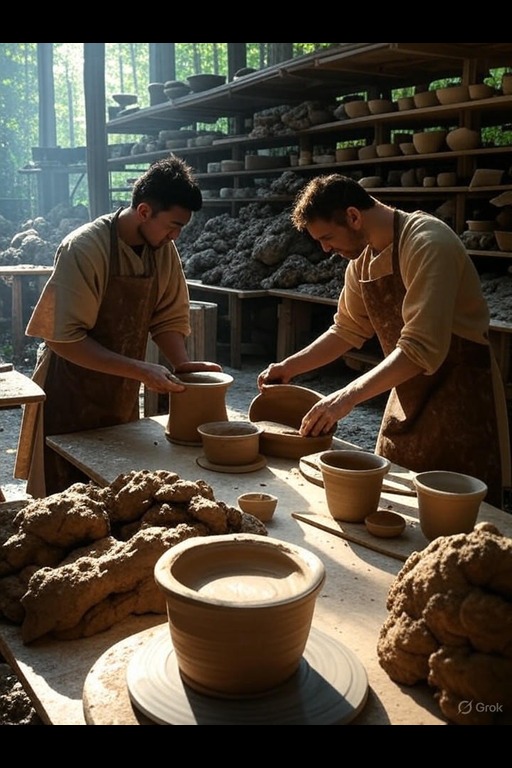
Clay (Stoneware) is a versatile mineral resource found in temperate rainforest regions, where it is often quarried or gathered from natural deposits. The material is characterized by its plasticity when wet, allowing it to be shaped into various forms. After extraction, blocks and fines are sorted for different applications, including construction and ceramics. Its durability and malleability make it a favored choice in multiple industries, particularly for the creation of trade goods and functional items.
Universal
Biomes
Politics
Alignments
Races
Resources
Classes
Elevations
Religions
World
No accessible MAPs found.
Biome
Politics
Alignment
Race
Resource
Class
HeightMap
Clay (Stoneware)
Detailed Description
Clay (Stoneware) is a robust mineral that emerges from the weathering of igneous and sedimentary rocks, accumulating in layers within temperate rainforest biomes. These regions provide a rich environment for clay formation, where the interplay of rainfall, vegetation, and soil composition contributes to the quality and characteristics of the clay. The mineral’s fine particles possess a unique plasticity that enables artisans and builders to manipulate it into a variety of shapes and textures, making it an essential resource in many crafting and construction processes. Its ability to hold moisture and retain heat enhances its usability in diverse applications, from pottery to structural components. Quarrying clay involves careful excavation techniques to preserve the integrity of the deposits. Artisans often scoop clay from beds or terraces, ensuring that the material remains as uncontaminated and workable as possible. Once extracted, the clay is sorted into different grades; some is set aside for shaping into bricks and tiles, while finer varieties are prepared for firing into ceramics or glazing into glass products. Heating the clay transforms its properties, resulting in a hard, durable ceramic that withstands the test of time, making it ideal for both functional and decorative items. The versatility of clay allows it to serve various industries, with many artisans specializing in the creation of goods that are not only practical but also aesthetically pleasing. In addition to its use in construction and ceramics, clay is an important component in trade. Finished goods such as cut stone, glass, and ceramic wares are highly sought after, often exchanged between regions. The value of clay products lies not only in their utility but also in the craftsmanship that goes into each piece. As a resource, clay (stoneware) stands at the intersection of nature and human creativity, fostering a culture of innovation and trade that enriches communities and sustains industries. Its extraction and processing echo the longstanding traditions of artisans who have honed their skills over generations, ensuring the ongoing relevance of this timeless material.
Examples
Common products derived from clay (stoneware) include cut stone used in building projects, as well as a range of ceramics that serve both functional and decorative purposes. Glass and cement materials are also produced, showcasing the adaptability of clay in various contexts. Beyond construction, trade goods crafted from clay often reflect the unique artistry of the region, appealing to merchants and collectors alike. The enduring nature of these items contributes to their continued demand, establishing clay as a cornerstone of industry and commerce.