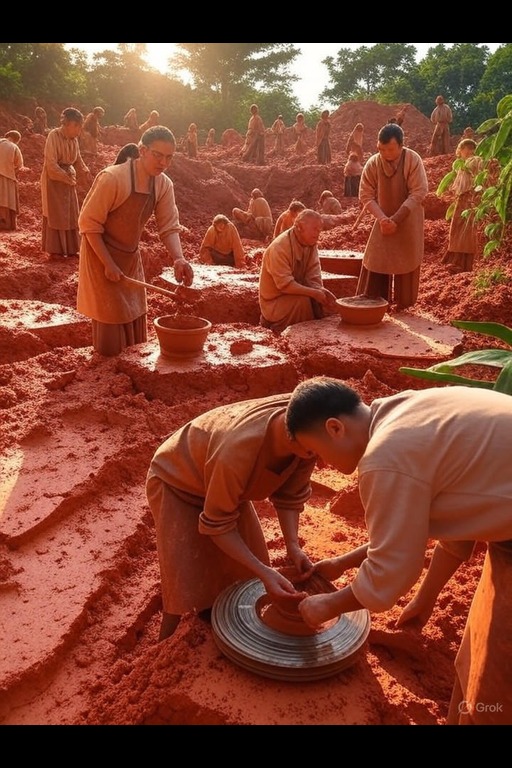
Red Clay is a versatile mineral commonly extracted from beds and terraces in tropical seasonal forests. Its rich, earthy hue offers aesthetic and functional value, making it popular in various industries. Blocks are often cut for construction purposes, while finer particles can be processed into ceramics and glass. This resource plays a crucial role in local economies through quarrying and trade activities.
Universal
Biomes
Politics
Alignments
Races
Resources
Classes
Elevations
Religions
World
No accessible MAPs found.
Biome
Politics
Alignment
Race
Resource
Class
HeightMap
Clay (Red)
Detailed Description
The extraction of Red Clay involves careful quarrying techniques, where workers scoop and excavate material from natural deposits. These deposits often form in areas where water has eroded surrounding soil, leaving behind rich, pliable clay. The consistency of Red Clay varies based on the specific location from which it is sourced, impacting its suitability for different applications. In its raw form, the clay is malleable and easily shaped, making it ideal for artisans and builders alike. Once quarried, the material is sorted into blocks and finer particles, with each serving distinct purposes across various industries. Red Clay finds significance in construction, where it is shaped into durable blocks for walls and foundations. The natural thermal properties of the clay provide insulation, enhancing the structural integrity of buildings. In addition to construction, the finer grades of Red Clay are often transformed into glass and ceramics. Artisans skillfully mold the clay into intricate pottery, tiles, and decorative items, showcasing its aesthetic potential. When fired at high temperatures, the clay becomes dense and resilient, suitable for both functional and artistic purposes. This transformation highlights the unique characteristics of Red Clay, emphasizing its role as a bridge between natural resources and creative expression. Trade plays a pivotal role in the lifecycle of Red Clay, as it is sought after beyond its region of origin. Artisans and builders transport finished products to markets, where they are valued not only for their utility but also for their craftsmanship and beauty. The economic impact of Red Clay extends to local communities, creating jobs in quarrying, manufacturing, and trade. As such, it serves as both a foundational material for construction and an avenue for cultural expression, weaving together the practical and the artistic in its many forms. With its extensive applications and rich history, Red Clay remains a vital resource in regions where it is found. Its ability to adapt to various uses—from construction to art—ensures its continued relevance in the face of changing economic landscapes. As techniques for extraction and processing evolve, the legacy of Red Clay will likely endure, shaping both the built environment and the artistic endeavors of future generations.
Examples
Red Clay is utilized in a variety of products that highlight its versatility. Cut stone blocks serve as a fundamental building material in both residential and commercial structures. In the realm of artistry, ceramics crafted from this clay are prized for their vibrant color and texture. Additionally, when processed, Red Clay can be transformed into glass or cement, further expanding its applications. Trade goods made from Red Clay often reflect the unique cultural heritage of the regions where they are produced.