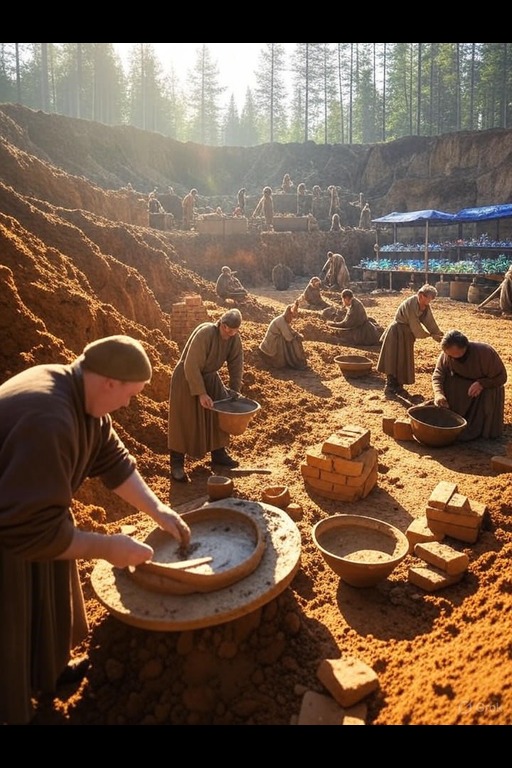
Clay (Fireclay) is a versatile mineral commonly found in taiga biomes, often quarried or scooped from natural beds and terraces. It is processed into various forms, with blocks of clay being cut for construction, while finer particles are used in the production of glass and ceramics. This resource plays a crucial role in multiple industries, including quarrying, construction, and trade. Its adaptability allows for a wide range of applications, making it a valuable commodity in many markets.
Universal
Biomes
Politics
Alignments
Races
Resources
Classes
Elevations
Religions
World
No accessible MAPs found.
Biome
Politics
Alignment
Race
Resource
Class
HeightMap
Clay (Fireclay)
Detailed Description
Fireclay is a specific type of clay known for its resistance to high temperatures, making it particularly suitable for various construction and manufacturing processes. It is typically found in layers beneath the surface, often in areas where geological activity has occurred. Workers extract the clay by digging or scooping it from beds, ensuring that they remove both the fine particles and the larger blocks. The extraction process requires careful handling to maintain the integrity of the resource, as the quality of the clay can diminish through improper techniques. Once quarried, fireclay undergoes distinct processing stages. The larger blocks are often cut into manageable sizes for use in building structures, such as foundations or brickwork. Its thermal properties allow it to withstand heat, making it ideal for applications like fireplaces and furnaces. On the other hand, the finer clays are often subjected to firing or melting, transforming them into glass or ceramics. These products are then shaped and refined, leading to the creation of durable items that serve both functional and aesthetic purposes in various environments. The versatility of fireclay extends to its role in trade, where it is exchanged for other goods or resources. Because of its widespread applications, it has become a staple in many local and regional markets. Craftsmen and builders alike seek high-quality clay for their projects, knowing that the right material can significantly enhance the longevity and performance of their work. As societies evolve, the demand for this mineral continues to grow, cementing its importance in both traditional craftsmanship and modern construction techniques.
Examples
Examples of products derived from fireclay include cut stone, which is widely used in building projects for its durability, and glass materials that are fashioned into various containers and decorative items. Additionally, ceramics made from fireclay serve practical purposes, ranging from household items to artistic expressions. In trade, fireclay is often transformed into a variety of goods that can be exchanged for other essential resources, reflecting its significance in economic systems. Its adaptability ensures that fireclay remains a key resource across various industries.