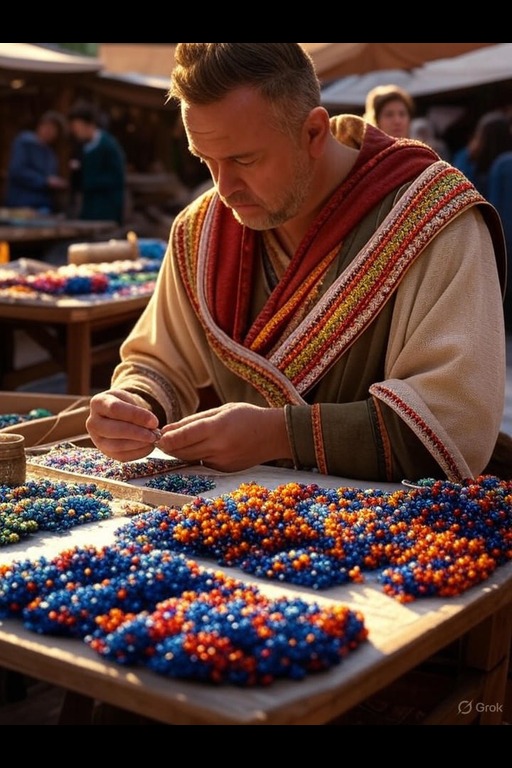
Ceremonial seed beads are small, decorative objects crafted from various materials and valued for their fine surface and workability. Artisans shape them with precision tools, creating pieces that are often bundled and labeled by size for ease of use in workshops and trade. These beads are integral to numerous artisan crafts, particularly in decorative arts and textiles. Their vibrant colors and intricate designs make them sought after in markets, where they serve both aesthetic and practical purposes.
Universal
Biomes
Politics
Alignments
Races
Resources
Classes
Elevations
Religions
World
No accessible MAPs found.
Biome
Politics
Alignment
Race
Resource
Class
HeightMap
Ceremonial Seed Beads
Detailed Description
Ceremonial seed beads are a versatile resource, used extensively across various artisan crafts. Typically crafted from a range of materials, including glass, clay, and natural fibers, each bead is shaped to exhibit smooth surfaces and intricate details. Artisans often work with small tools to achieve the desired forms and embellishments, allowing for a high degree of customization. The crafting process emphasizes not only the aesthetic appeal of the beads but also their functional applications in decorative arts and textiles. They can be strung together, sewn onto fabrics, or incorporated into carved goods, enhancing the beauty of the final products. The production of ceremonial seed beads involves meticulous attention to detail. Artisans sort and bundle these beads according to size, ensuring that they can be easily accessed and selected for various projects. This organization aids both in workshop efficiency and in the trading process, where artisans and merchants rely on a clear presentation of goods. The colors and patterns of the beads often reflect regional aesthetics, making them a canvas for cultural expression. In marketplaces, the vibrant displays attract the attention of buyers, highlighting the craftsmanship and creativity that go into every piece. Beyond their decorative uses, ceremonial seed beads play a role in the economy of artisan crafts. As trade goods, they are highly valued and sought after in exchanges, both for their beauty and for the skill required to produce them. Artisans often engage in intricate designs that tell a story or symbolize a particular theme, making these beads more than mere decorative elements; they embody cultural significance and craftsmanship. This combination of artistry and practicality ensures that ceremonial seed beads remain a cherished resource in many regions, allowing artisans to create works that are as functional as they are beautiful.
Examples
The applications of ceremonial seed beads are diverse and imaginative. In textiles, they are often sewn into garments and accessories, adding color and texture to everyday wear. Carved goods may feature seed beads as inlays, enhancing their visual appeal and creating striking contrasts. Decorative items like jewelry and ceremonial ornaments utilize these beads to create intricate designs that captivate the eye. As trade goods, they are exchanged across regions, facilitating cultural connections and artistic collaborations.