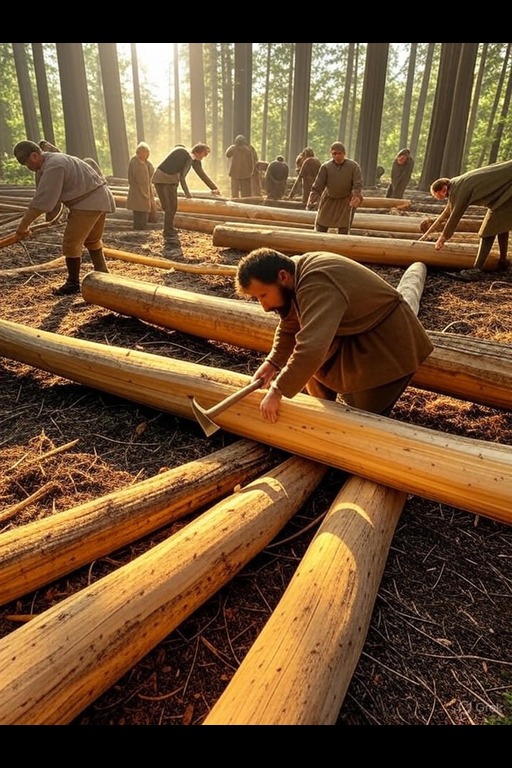
Cedar Timber is prized for its durability and resistance to decay, making it a favored resource in various industries. Sourced from mature stands, the trunks are selected for their straightness before being felled. Once harvested, the logs undergo a rough milling process and are stacked to season, with special attention given to sealing the ends to prevent checking. This meticulous preparation ensures high-quality timber for construction, carpentry, and trade purposes.
Universal
Biomes
Politics
Alignments
Races
Resources
Classes
Elevations
Religions
World
No accessible MAPs found.
Biome
Politics
Alignment
Race
Resource
Class
HeightMap
Cedar Timber
Detailed Description
Cedar Timber, derived from the robust trees of temperate rainforests, is a resource that embodies both strength and beauty. The trees are typically characterized by their tall, straight trunks, which are harvested selectively to ensure that the finest specimens are utilized. After felling, the logs are carefully transported to milling sites where they undergo a rough milling process. This initial stage is crucial, as it sets the foundation for the timber's quality and usability. During the milling process, logs are cut into manageable lengths and stacked in a manner that promotes even seasoning. This process is essential, as it allows moisture to escape gradually and uniformly, preventing warping or cracking that can occur if logs are dried too quickly. To further protect the integrity of the wood, the ends of the logs are sealed. This simple yet effective technique limits the formation of checks, which are splits that can compromise the wood’s strength and aesthetic appeal. Once adequately seasoned, Cedar Timber is transformed into a variety of products that serve numerous industries. In carpentry, it is favored for its workability and resistance to insects, making it an ideal choice for crafting furniture and cabinetry. The construction sector benefits from its stability and resilience, often using cedar beams and boards in structural applications. Furthermore, artisans appreciate Cedar Timber for its natural aroma and attractive grain patterns, leading to the creation of intricate carved goods. Beyond its practical applications, Cedar Timber is also a commodity in trade, valued for its quality and desirability across regions. The versatility of Cedar Timber makes it a staple resource that supports an array of industries. Its natural properties ensure that it remains an enduring choice, whether for crafting elegant furniture, constructing durable buildings, or producing decorative items. The careful harvesting and processing methods utilized highlight a respect for the resource, ensuring sustainability and continued availability for future generations.
Examples
Common products derived from Cedar Timber include lumber used in building homes, sturdy beams that form the backbone of structures, and beautifully carved goods that showcase the wood’s fine grain. In addition, it serves as an important trade timber, sought after for its favorable properties. Artisans often select cedar for creating decorative items, taking advantage of both its workability and natural aesthetic. The enduring popularity of Cedar Timber demonstrates its value across various applications.