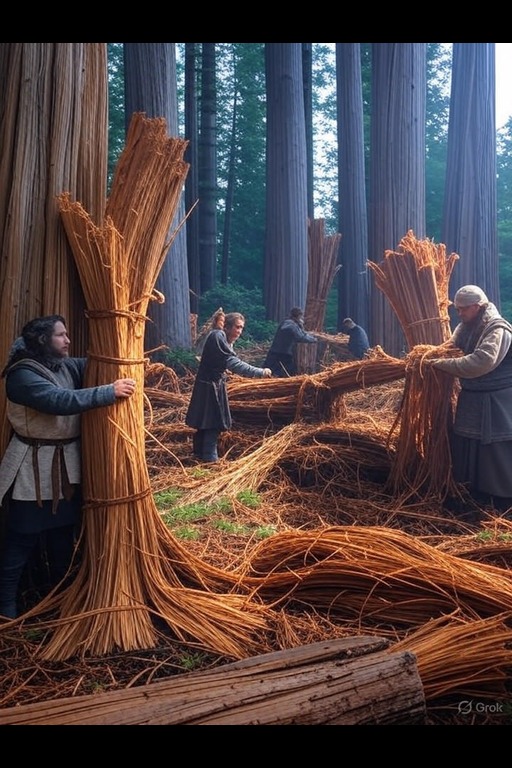
Cedar Bark Fiber is derived from mature cedar trees, specifically harvested from selected stands. This natural resource is characterized by its strength and versatility, making it highly sought after in various industries. The process begins with the careful felling of straight trunks, followed by rough milling and proper seasoning techniques. Its applications range from construction to fine craftsmanship, underscoring its importance in trade and industry.
Universal
Biomes
Politics
Alignments
Races
Resources
Classes
Elevations
Religions
World
No accessible MAPs found.
Biome
Politics
Alignment
Race
Resource
Class
HeightMap
Cedar Bark Fiber
Detailed Description
The extraction of Cedar Bark Fiber involves the meticulous selection and felling of mature cedar trees that are known for their robust, straight trunks. Once harvested, the logs undergo a rough milling process to prepare them for further use. This preparation includes stacking the milled logs to season, a critical step that enhances the fiber's durability and usability. To minimize the risk of checking—cracks that can form as the wood dries—the ends of the logs are sealed, preserving the integrity of the material during the drying process. This careful attention to detail ensures that the resulting fiber maintains its high-quality standards before it enters the marketplace. Cedar Bark Fiber finds utility across a range of industries, playing a vital role in logging, carpentry, and construction. Its inherent strength and resistance to decay make it an ideal choice for lumber and beams used in building structures. Moreover, artisans and craftsmen value the fiber for carved goods, where the natural beauty of the cedar is showcased in finely crafted items such as sculptures and decorative pieces. The trade of Cedar Bark Fiber is significant, as it serves as a foundation for both local economies and broader trade networks. Its availability and quality often dictate market trends, influencing both pricing and demand. In addition to its structural applications, Cedar Bark Fiber also holds cultural significance in various contexts. It is often employed in traditional crafts, where its qualities are utilized to create items that reflect the heritage and artistry of those who work with it. This aspect of the resource highlights the deep connection between natural materials and the cultural practices surrounding them. As such, Cedar Bark Fiber is not merely a functional resource but also an integral component of community identity and continuity. The careful stewardship of cedar forests is therefore of paramount importance, ensuring that this resource remains available for future generations while sustaining the ecosystems in which it thrives.
Examples
Common products made from Cedar Bark Fiber encompass a wide range of construction materials, including sturdy lumber and versatile beams. Carved goods crafted from this fiber exhibit both beauty and durability, making them prized possessions. Additionally, trade timber sourced from cedar trees is often sought after for its fine grain and resilience. The resource is essential not only for building but also for the creation of culturally significant items that embody the artistry of the craftsmen.