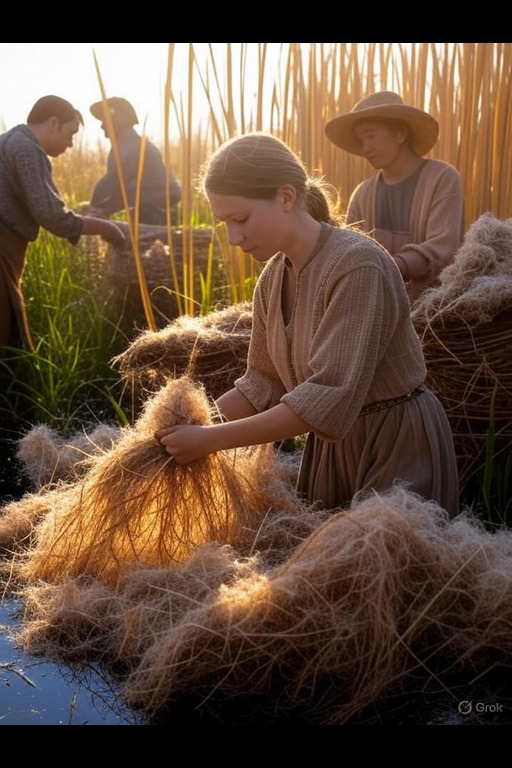
Cattail Fibers are a versatile resource harvested from the wetlands, thriving in temperate dry and wet grassland biomes. Skilled gatherers utilize seasonal knowledge to collect these fibers sustainably, ensuring that natural stocks remain robust. This resource plays a vital role in local crafts and trade, fostering community connections around sources of cattails. Many settlements are conveniently located near these rich areas, enabling easy access for artisans and traders alike.
Universal
Biomes
Politics
Alignments
Races
Resources
Classes
Elevations
Religions
World
No accessible MAPs found.
Biome
Politics
Alignment
Race
Resource
Class
HeightMap
Cattail Fibers
Detailed Description
Cattail Fibers is derived from the long, slender stalks of the cattail plant, commonly found in marshy regions, wetlands, and along the banks of slow-moving streams. The fibrous structure of the plant is prized for its flexibility and strength, making it an essential material for various applications. Weaving, thatching, and papermaking are three primary industries that benefit from this resource. Artisans skillfully transform cattail fibers into a diverse array of products, ensuring that local traditions and techniques are preserved and passed down through generations. Gathering cattail fibers requires a deep understanding of the plant's growth cycle, as well as the seasonal changes that affect its yield. Experts in harvesting know the precise moments when the fibers are at their most robust, allowing them to collect without damaging the plants or disrupting the ecosystem. This sustainable approach not only benefits the gatherers but also maintains the delicate balance of local habitats, ensuring that future generations will continue to rely on this abundant resource. In crafting, cattail fibers are fashioned into various goods such as woven mats, thatch bundles for roofing, and sturdy reed baskets. The fibers are also utilized in the production of papyrus sheets, which are highly valued for their utility in writing and record-keeping. Cordage made from cattail fibers is respected for its durability and strength, often employed in various construction and transport applications. As a result, trade in cattail products supports local economies, bringing together communities through the exchange of goods and skills. The significance of cattail fibers extends beyond mere utility; they embody the relationship between people and their environment. By fostering sustainable harvesting practices, communities enhance their resilience and adaptability, ensuring that the benefits of this resource endure well into the future. As settlements thrive near these wetlands, the tradition of harvesting and crafting with cattail fibers continues to shape cultural identity and artistry.
Examples
Products made from cattail fibers showcase the ingenuity of local artisans and their deep connection to the surrounding environment. Woven mats serve both practical and decorative purposes, often gracing the floors of homes and communal spaces. Thatch bundles provide essential roofing material that keeps structures sheltered from the elements, while reed baskets are celebrated for their unique designs and robust construction. In addition, papyrus sheets crafted from cattail fibers are an important medium for communication and documentation, reflecting the artistic expression of the culture. Finally, the cordage derived from these fibers remains indispensable in various crafts, tying together the utility and beauty found in this natural resource.