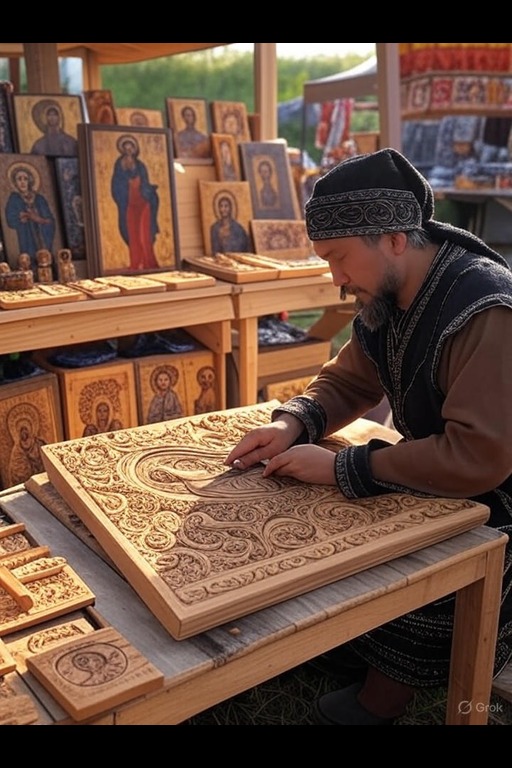
Carved Icons are intricately fashioned artifacts often created from locally sourced materials. Found mainly in regions characterized by open grasslands and acacia trees, these items are sought after for their aesthetic appeal and craftsmanship. Artisans skillfully shape these icons to reflect the rich cultural narratives of their surroundings. Due to their popularity, Carved Icons tend to command favorable prices in trade markets, particularly in areas where they are abundant.
Universal
Biomes
Politics
Alignments
Races
Resources
Classes
Elevations
Religions
World
No accessible MAPs found.
Biome
Politics
Alignment
Race
Resource
Class
HeightMap
Carved Icons
Detailed Description
The creation of Carved Icons is a time-honored tradition that draws on the natural resources of its environment. Artisans typically select durable materials, such as hardwoods or stones, which are plentiful in areas with savanna or tropical dry forests. After careful selection, these materials are transformed through meticulous carving techniques, often enhanced by intricate detailing that speaks to the artisan’s creativity and skill. The resulting icons can represent a variety of themes, from local wildlife to abstract designs, making each piece unique and meaningful to its creator. These icons are not merely decorative; they hold cultural significance, often serving as symbols of community identity or spiritual beliefs. Their presence in trade markets reflects both artistry and commerce, with merchants specializing in the distribution of high-quality icons. Trade hubs in grassland regions play a crucial role in this economy, establishing standards for grading the quality of the icons and ensuring their safe transport to distant markets. The demand for Carved Icons extends beyond local borders, as collectors and enthusiasts seek out these artifacts for their aesthetic and historical value. The market dynamics surrounding Carved Icons showcase the confluence of art and trade. Artisans often collaborate with merchants to enhance the visibility of their work, leading to vibrant exchanges that celebrate craftsmanship. The icons are also integrated into various forms of art and decoration, appearing in homes, ceremonial spaces, and public displays. As such, they become not only a means of livelihood for artisans but also a vital link between communities, their stories, and the broader world.
Examples
Common products derived from Carved Icons include ornamental pieces that adorn both homes and public spaces. Artisans frequently create trade goods that cater to diverse tastes, ensuring a wide appeal across different regions. Furthermore, Carved Icons serve as unique gifts and souvenirs, allowing individuals to carry a piece of culture with them. The craftsmanship behind these icons is celebrated in artisan markets, where they can fetch commendable prices based on their quality and artistic merit.