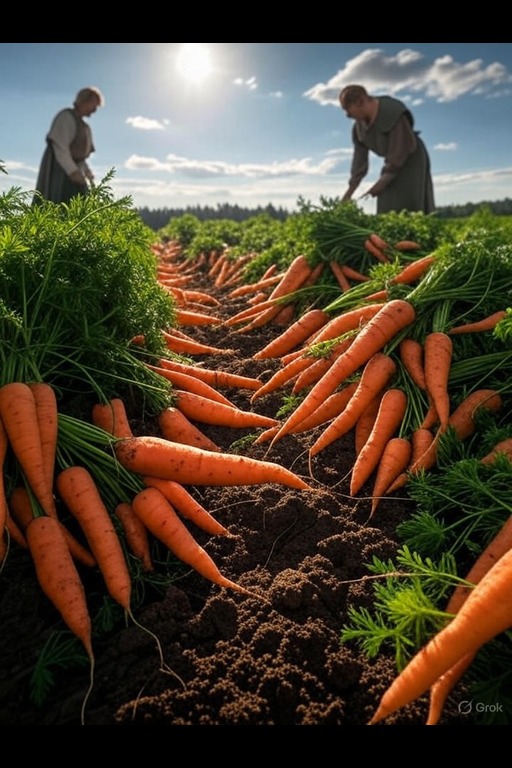
Carrots are a versatile root vegetable cultivated across diverse regions, including arid deserts and lush forests. These hardy plants thrive in various soil types, benefiting from specific seasonal farming practices. Their adaptability allows for a range of culinary applications, further enhancing their value in trade. As a staple food source, carrots contribute to both local diets and broader agricultural economies.
Universal
Biomes
Politics
Alignments
Races
Resources
Classes
Elevations
Religions
World
No accessible MAPs found.
Biome
Politics
Alignment
Race
Resource
Class
HeightMap
Carrots
Detailed Description
Renowned for their vibrant orange hue, carrots are primarily cultivated for their edible taproots. They flourish in a variety of biomes, from the harsh conditions of deserts to the temperate zones of grasslands and forests. Each environment influences the characteristics of the carrots, such as size, sweetness, and texture, resulting in subtle regional variations. The cultivation process is deeply intertwined with the rhythms of the seasons, as farmers employ specific planting and harvesting techniques to optimize yield and quality. Water availability, soil composition, and climate play crucial roles in determining the success of each crop. Harvesting carrots requires careful timing; roots are typically pulled from the soil when they reach their desired maturity. This process demands not only knowledge of the plants but also an understanding of weather patterns and soil conditions. Post-harvest, carrots can be enjoyed fresh or preserved in various forms, such as pickled, dried, or stewed. These preservation methods are essential, especially in regions where storage is necessary for sustenance through harsher seasons. Additionally, preserved carrots are favored in trade, allowing caravans to transport these nutritious roots over long distances without spoilage. Beyond their culinary applications, carrots serve as an important livestock feed, contributing to the diet of various farm animals. Their nutritional value makes them a desirable choice for maintaining healthy livestock, and their cultivation supports the broader agricultural ecosystem. As trade routes expand, the demand for carrots continues to grow, linking distant communities through the exchange of this humble yet vital resource. Overall, the cultural significance and agricultural importance of carrots highlight their role in sustaining life across many landscapes.
Examples
Carrots are enjoyed in countless culinary forms, appealing to a wide range of palates. Pickled carrots, often seasoned with spices, provide a tangy accompaniment to meals, while stewed carrots offer a hearty addition to soups and casseroles. Dried carrot chips serve as nutritious snacks, retaining their sweetness and crunch. For a comforting dish, carrot mash blends the roots with butter and spices, creating a creamy delight. Carrot soup, rich in flavor, offers warmth and nourishment, showcasing the vegetable's versatility.