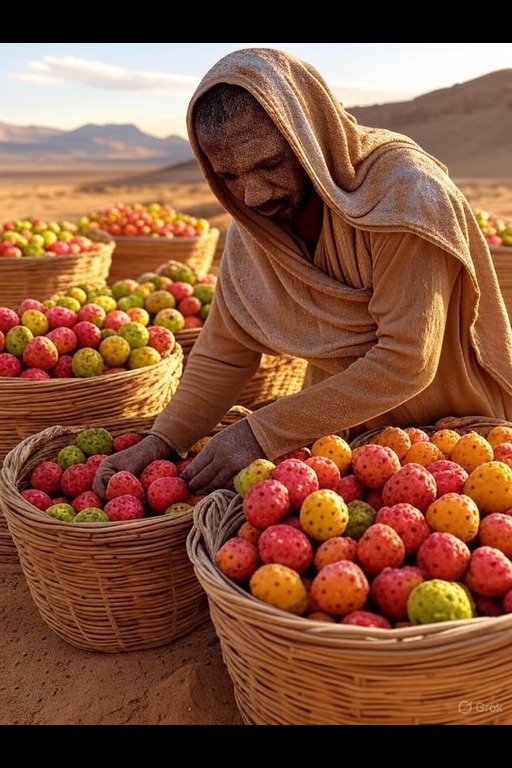
Cactus Fruit is cultivated or harvested in hot desert regions, where it thrives in harsh conditions marked by minimal rainfall and intense sunlight. The fruit’s unique taste and texture are shaped by the climate, local soil conditions, and age-old agricultural practices. Seasonal methods play a significant role in influencing both the quality and yield of the harvest. Surpluses are often traded with neighboring territories, while caravans value preserved forms for their practicality on long journeys and during winter months.
Universal
Biomes
Politics
Alignments
Races
Resources
Classes
Elevations
Religions
World
No accessible MAPs found.
Biome
Politics
Alignment
Race
Resource
Class
HeightMap
Cactus Fruit
Detailed Description
The cultivation of Cactus Fruit is a testament to human ingenuity in adapting to challenging environments. Grown primarily in arid regions characterized by dry, rocky soils, these fruits flourish on cacti that have evolved to conserve moisture and withstand extreme temperatures. Farmers skillfully manage their crops, adjusting planting and harvesting techniques in response to the cyclical nature of the seasons, ensuring that the fruit reaches its full potential in flavor and nutritional value. The harvest is typically a communal affair, with families coming together to gather ripe fruits, sharing techniques passed down through generations to optimize yield. Processing methods for Cactus Fruit are diverse, allowing for a variety of products that cater to different tastes and uses. After harvest, the fruit can be dried to create a lightweight snack, perfect for travelers or those seeking a nutritious addition to their diet. Alternatively, it can be preserved in jars, capturing its essence for later consumption. Fermentation is another popular method, transforming the fruit into tangy beverages that offer refreshing relief from the heat. Spices may also be added during preparation, enhancing the fruit's natural sweetness and resulting in a vibrant culinary experience. Candied versions provide a delightful treat, appealing to those with a sweet tooth while preserving the fruit’s unique characteristics. Trade plays a vital role in the distribution of Cactus Fruit products, as surpluses are commonly exchanged with surrounding regions. Merchants transport the fruit and its derivatives in caravans, navigating the arid landscapes to reach communities in need of sustenance or seeking new flavors. The preserved forms, in particular, are prized for their longevity, making them ideal for long journeys where fresh produce is scarce. Additionally, they serve as an essential food source throughout the colder months when fresh fruits are not available, further establishing Cactus Fruit's significance in local diets and economies. This exchange fosters relationships between communities, often leading to the sharing of cultivation techniques and culinary traditions that elevate the status of Cactus Fruit in regional cuisines.
Examples
Common examples of Cactus Fruit products include dried slices that maintain the fruit's essence while providing convenience for on-the-go snacking. Preserved versions, often found in jars, capture the sweet, tangy flavors of the fruit, making them a staple in many households. Fermented beverages made from the fruit offer a refreshing option during hot days, while spiced variations introduce a unique twist to traditional recipes. For those with a penchant for sweets, candied Cactus Fruit provides a delightful treat that showcases the versatility of this remarkable resource.