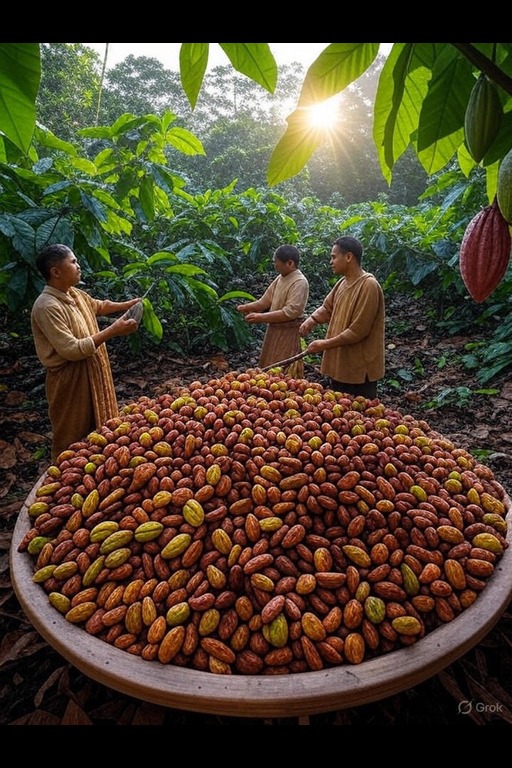
Cacao is a tropical crop that thrives in warm, humid environments, typically found in various forest biomes. This revered plant produces beans that are fundamental to numerous industries, including culinary, alchemical, and herbal practices. Farmers utilize seasonal techniques to cultivate and harvest cacao, which significantly influence both its quality and yield. Surpluses are often traded, with preserved cacao forms being especially valued for their durability during long journeys and winter months.
Universal
Biomes
Politics
Alignments
Races
Resources
Classes
Elevations
Religions
World
No accessible MAPs found.
Biome
Politics
Alignment
Race
Resource
Class
HeightMap
Cacao
Detailed Description
The cacao plant, known for its large, vibrant pods, grows in rich, well-drained soils of tropical forests. Its cultivation is deeply intertwined with the climate, as it requires specific conditions of temperature and moisture to flourish. Farmers often engage in traditional practices passed down through generations, adapting their methods to the natural rhythms of the land. These seasonal approaches not only enhance the overall quality of the beans but also contribute to the sustainability of the ecosystem in which cacao is grown, ensuring a harmonious balance between agriculture and nature. Cacao beans, once harvested, undergo meticulous processing that transforms them into various forms, including ground cacao, cacao tinctures, and cacao tea. Each method draws out unique flavors and properties, allowing for a diverse range of culinary applications. In addition to its use in food and beverages, cacao finds a place in alchemical pursuits, where its rich compounds are valued for their potential effects. Herbalists also harness cacao's benefits, crafting salves and spices that combine healthful properties with the plant's distinctive taste. As a result, cacao serves as both a vital ingredient and a cultural symbol, reflecting the practices and traditions of those who cultivate it. Trade plays a significant role in the life of cacao, as surplus beans and products are exchanged between communities. Caravans often transport preserved cacao, ensuring that this important resource can be enjoyed far beyond its place of origin. This exchange not only enhances culinary diversity but also strengthens connections between distant cultures. The appreciation for cacao transcends local boundaries, making it a cherished commodity that supports livelihoods and fosters relationships across regions. Through its cultivation, processing, and trade, cacao emerges not just as a crop but as a vital thread woven into the fabric of society.
Examples
Common products derived from cacao demonstrate its versatility and significance. Ground cacao is often used in recipes for sweet and savory dishes, while cacao tinctures serve various health-related purposes. Cacao tea has gained popularity as a comforting beverage, offering warmth and flavor in colder climates. Additionally, cacao spice blends provide unique culinary experiences, and cacao salves are crafted for their soothing properties. Each of these examples showcases the multifaceted nature of cacao and its role in both everyday life and specialized practices.