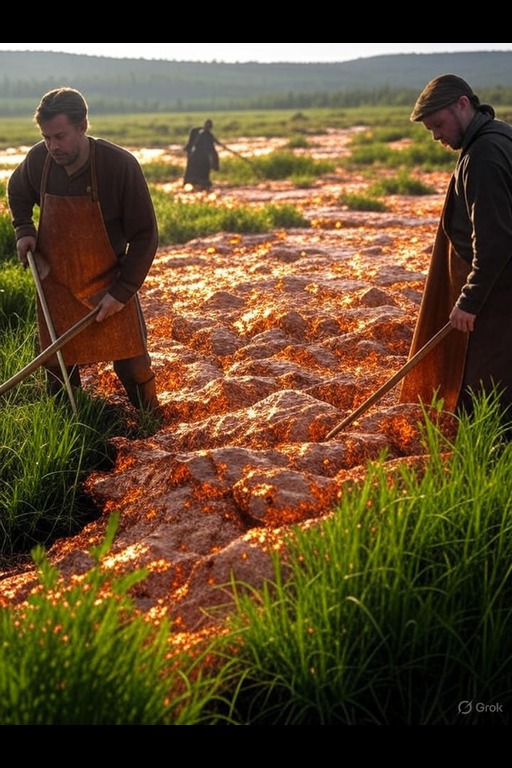
Bog Iron is a unique resource found on the surface of wet and dry boreal forests, as well as in tundras and polar deserts. This naturally occurring iron is shaped by the local environment, often emerging from bogs and marshy areas. Harvesters skilled in the art of collection can gather it sustainably, ensuring the resource remains available for future generations. It plays a significant role in local crafts, trade, and the economy of nearby settlements.
Universal
Biomes
Politics
Alignments
Races
Resources
Classes
Elevations
Religions
World
No accessible MAPs found.
Biome
Politics
Alignment
Race
Resource
Class
HeightMap
Bog Iron (Surface)
Detailed Description
In the cold expanses of boreal forests and the stark beauty of tundra regions, Bog Iron emerges as a remarkable resource shaped by nature's hand. This iron-rich sediment forms in areas where iron-laden water interacts with organic materials, leading to a unique accumulation that is often found in shallow bogs or marshy fringes of forests. The process is slow and intricately tied to seasonal changes, with conditions such as temperature and moisture influencing the quality and quantity of the iron present. Harvesters, well-acquainted with the landscape and its seasons, carefully navigate these environments to collect Bog Iron without depleting the vital stocks that sustain their communities. The skillful gathering of this resource is often a nuanced dance between timing and technique, ensuring that the delicate balance of the ecosystem is respected and maintained. Craftsmen in nearby settlements rely heavily on Bog Iron for their trades, fashioning it into tools and implements essential for daily life and various industries. Its sturdy nature makes it particularly suited for the creation of durable goods, from farming implements to cooking utensils. Additionally, the trade of Bog Iron fosters economic connections among communities, as it is often bartered alongside a variety of dried goods, preserves, salts, and spices. Crafters and merchants alike understand the value of this resource, leading to the establishment of trade routes that thrive on the exchange of locally sourced materials. As settlements grow and develop around reliable sources of Bog Iron, they also become hubs of culinary innovation, with local chefs incorporating iron-forged tools to enhance their culinary creations, thus intertwining the resource with the region's identity. The extraction of Bog Iron, while beneficial for crafting and trade, is a practice that comes with the responsibility to sustain the resource for future generations. Harvesters share knowledge passed down through generations, emphasizing techniques that allow for the collection of Bog Iron while ensuring the environment remains undisturbed. By observing seasonal patterns and understanding the delicate ecosystems in which Bog Iron thrives, these skilled individuals contribute not only to their communities' immediate needs but also to the long-term health of the landscape. In this way, Bog Iron serves as more than just a resource; it is a testament to the harmonious relationship between the land and its people, embodying the spirit of resilience and sustainability that characterizes life in boreal regions.
Examples
In various settlements, artisans create an array of products from Bog Iron, enriching their local craft cultures. Dried goods such as herbs and vegetables often accompany iron tools, enhancing culinary offerings and preserving seasonal bounties. Preserves, crafted using local ingredients, are frequently traded alongside Bog Iron, creating a network of interdependence among communities. Trade packs containing Bog Iron can also be found in bustling markets, showcasing the resource’s importance in regional commerce. Furthermore, locally produced salts and spices often find their way into the hands of cooks, who utilize iron cookware to elevate their culinary creations.