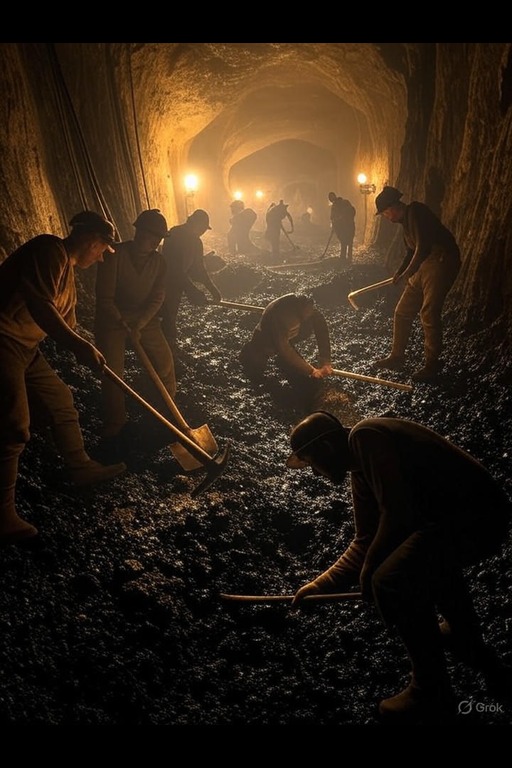
Bituminous shale is a sedimentary rock known for its rich organic content and energy-producing properties. Extracted from low galleries and seams, this mineral is carefully aired to mitigate dampness and harmful fumes. The blocks are dried and graded, primarily serving as a fuel for various industrial processes. Its versatility extends beyond energy production, finding uses in smelting and the creation of pigments and trade goods.
Universal
Biomes
Politics
Alignments
Races
Resources
Classes
Elevations
Religions
World
No accessible MAPs found.
Biome
Politics
Alignment
Race
Resource
Class
HeightMap
Bituminous Shale
Detailed Description
Bituminous shale forms in wetland environments where organic matter accumulates and is subjected to geological processes over time. This mineral is characterized by its dark color, high carbon content, and distinctive layering, which reflects its depositional history. Mining operations often involve accessing low-lying galleries where the shale is found in seams. Workers must exercise caution due to the potential for fluctuations in moisture and the release of volatile compounds during extraction. Proper ventilation is essential to ensure safety and minimize the inhalation of harmful fumes that can be produced when the shale is disturbed. Once harvested, the shale undergoes a series of processes to prepare it for various applications. First, it is aired to reduce moisture content, which is crucial for preventing decay and ensuring efficient burning properties. After airing, the blocks are dried and sorted based on their quality and intended use. Higher-quality pieces are often selected for applications in fuel production, where their ability to generate significant heat makes them valuable in forges and kilns. The lower grades may be utilized in other capacities, such as smelting aids or pigments, where their unique properties can enhance the quality or appearance of metalwork and artwork. The fuel trade heavily relies on bituminous shale, as it provides an efficient and relatively clean-burning energy source. Artisans and craftsmen appreciate its consistent performance in smelting operations, where precise temperatures are necessary to work with metals. Additionally, due to its unique coloration and texture, shale can be processed into pigments for use in various artistic endeavors or as a dye in textiles. Trade routes frequently feature this mineral as a valuable commodity, exchanged for other goods or services, making it an integral part of local economies. Its multifaceted applications continue to drive interest and demand across a wide range of industries, reinforcing the significance of bituminous shale in both everyday life and specialized crafts.
Examples
Common products derived from bituminous shale include solid fuel for heating and industrial processes, as well as smelting aids that enhance the efficiency of metal extraction. Additionally, artisans utilize it to create natural pigments, adding depth and richness to their creations. Trade goods made from bituminous shale often find their way to distant markets, where they are valued for both their functional and aesthetic qualities. Its role in various industries highlights the importance of this mineral beyond its primary use as a fuel source.