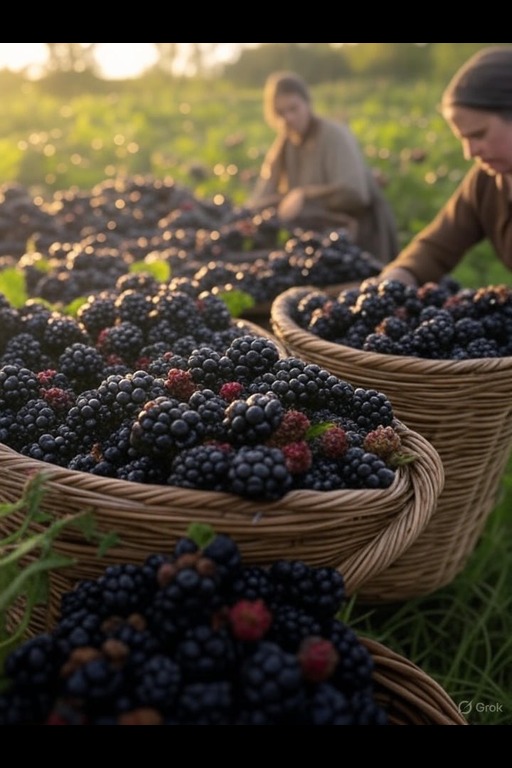
Berries (Blackberry) are small, juicy fruits that thrive in the undergrowth of temperate rainforests. They are often gathered by foragers equipped with minimal tools, typically during the harvest season when the berries reach their peak ripeness. Harvesters carefully sort the fruits, retaining only those that are sound and free from blemishes. The remaining berries are left to nourish the wild, ensuring a sustainable approach to gathering this valuable resource.
Universal
Biomes
Politics
Alignments
Races
Resources
Classes
Elevations
Religions
World
No accessible MAPs found.
Biome
Politics
Alignment
Race
Resource
Class
HeightMap
Berries (Blackberry)
Detailed Description
Blackberry berries grow on thorny brambles that thrive in the dappled sunlight of temperate rainforests. These clusters of fruit are notable for their deep purple-black hue and luscious sweetness, attracting both wildlife and harvesters alike. The plants typically flourish in well-drained soil, often found near clearings or the edges of forested areas, where they can receive ample sunlight while benefiting from the moisture-rich environment. The process of gathering these berries is straightforward yet requires a practiced eye to discern the optimal moment for collection, as overripe or underdeveloped berries do not meet the standards set by those who seek to utilize them for various purposes. Gathering blackberries involves minimal tools, often limited to a simple basket or pouch for collecting the fruits. Harvesters gently pull the ripe berries from the brambles, taking care to avoid thorns and ensuring that the delicate fruits remain intact. Once collected, the berries are sorted at the edge of the forest, where only those deemed fit for use are kept. This practice not only preserves the quality of the gathered berries but also fosters respect for the natural ecosystem by allowing the less desirable fruits to remain in their habitat, contributing to the cycle of life within the forest. The versatility of blackberries extends to various industries, where they play a role in crafting, trade, construction, and transport. The fruits are often transformed into craft goods, such as jams and preserves, which are traded among communities. Additionally, the plants themselves can be utilized as building materials; their sturdy brambles can be woven into durable structures or used as natural barriers. Beyond their culinary and crafting applications, blackberries contribute to transport logistics, as they are often transported to markets where they can be sold fresh or processed into value-added products. The sustainable gathering of blackberries signifies a harmonious relationship between human activity and nature, reinforcing the importance of respecting and nurturing natural resources in temperate biomes.
Examples
Blackberries serve as a fundamental ingredient in various craft goods, most notably in the creation of preserves, syrups, and desserts. They can also be transformed into dyes for textiles, providing vibrant colors that are highly sought after. In construction, the strong brambles can serve as natural fencing materials, while their foliage may provide insulation for structures. As trade goods, blackberries are exchanged in markets and fairs, appealing to those seeking fresh produce or artisanal creations derived from these berries. The multifaceted uses of blackberries highlight their significance within the economy of temperate rainforest regions.