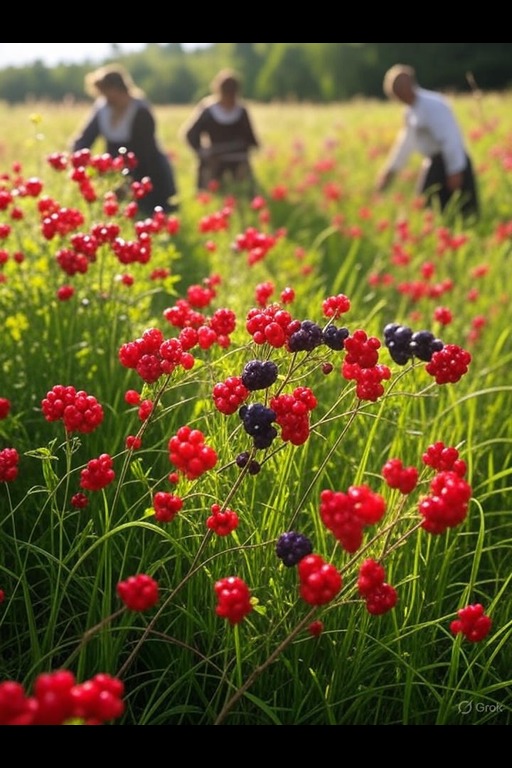
Berries are small, often vibrant fruits that flourish in temperate and boreal climates, particularly within diverse forest ecosystems. Cultivated and harvested through seasonal practices, these fruits are shaped by their environment, resulting in a rich variety of flavors and colors. Their quality and yield can greatly depend on the methods employed during their growth and harvest. Many communities engage in trade, exchanging surplus berries for other goods and preserving them for use throughout the year.
Universal
Biomes
Politics
Alignments
Races
Resources
Classes
Elevations
Religions
World
No accessible MAPs found.
Biome
Politics
Alignment
Race
Resource
Class
HeightMap
Berries
Detailed Description
Berries thrive in environments characterized by well-drained soils, ample sunlight, and a temperate climate, making them a staple in various agricultural practices. These fruits are typically harvested during the late spring and summer months, as they reach peak ripeness and flavor. The seasonal nature of berry cultivation means that farmers employ a number of traditional techniques, often passed down through generations, to ensure a bountiful harvest. Techniques may include soil preparation, irrigation methods, and pest management, which are all tailored to enhance the growth potential of specific berry varieties. The labor-intensive process of cultivating berries involves careful monitoring of their growth stages, as well as strategic timing for picking. Berries are often hand-harvested to maintain their delicate structure and prevent bruising. Once harvested, they can be consumed fresh or processed into a variety of products. Many communities take pride in their unique berry-based offerings, such as jams, preserves, and beverages, each reflecting local taste preferences and traditions. Trade routes often flourish around the exchange of preserved berries, which are highly valued for their ability to be stored long after the harvest. Merchants transport dried berry products, jams, and wines over great distances, ensuring that the flavors of the harvest are enjoyed year-round. In addition, preserved berries serve as important sustenance during the harsher months, providing both nutrition and comfort through their vibrant tastes. The versatility of berries in culinary applications makes them a vital resource, fostering both local cuisines and broader economic connections between regions. As berries continue to be a sought-after resource, the commitment to sustainable and ethical farming practices grows. Farmers and traders alike are increasingly aware of their role in preserving the delicate ecosystems that support berry growth. This consciousness not only ensures the longevity of berry cultivation but also contributes to the health of the wider environment, emphasizing balance and respect for nature's bounty.
Examples
Dried berries are often utilized in trail mixes and health foods, valued for their concentrated flavors and nutrients. Berry jam is a beloved spread, cherished for its sweet and tart profile, and commonly enjoyed on breads and pastries. Beverages such as berry wine and juices showcase the fruits' diverse applications, providing refreshing options for various occasions. Candied berries serve as delightful treats, enhancing confections with their natural sweetness and vivid colors. These products exemplify the myriad ways berries can be transformed and enjoyed throughout the seasons.