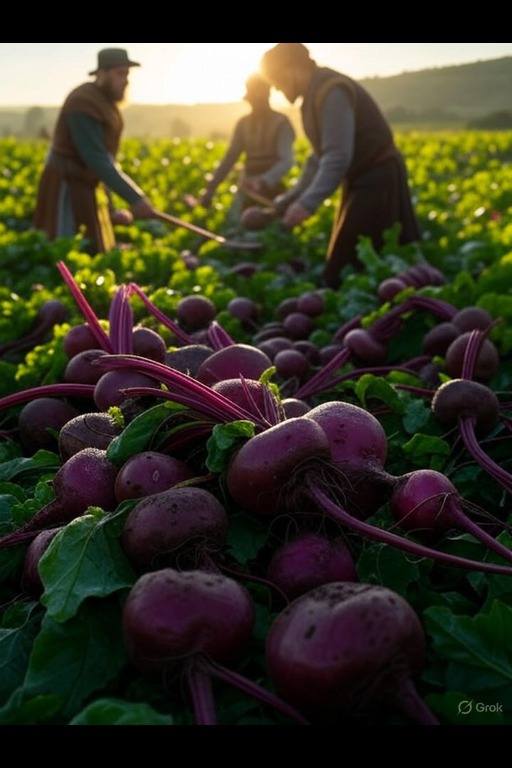
Beets are a popular crop extensively cultivated in varied temperate climates, where soil and seasonal conditions shape their growth. These hardy root vegetables thrive in environments ranging from dry grasslands to lush deciduous forests. Farmers often utilize traditional methods to enhance quality and yield, ensuring a steady supply for local markets. The versatility of beets allows for a plethora of culinary applications, and their preserved forms are especially valued for long-term storage and trade.
Universal
Biomes
Politics
Alignments
Races
Resources
Classes
Elevations
Religions
World
No accessible MAPs found.
Biome
Politics
Alignment
Race
Resource
Class
HeightMap
Beets
Detailed Description
Cultivated primarily in temperate regions, beets flourish in a variety of biomes, including dry grasslands and moist deciduous forests. The cultivation process is deeply influenced by the local climate and soil composition, permitting farmers to refine their techniques for optimal growth. The roots develop a unique flavor profile that varies significantly depending on environmental conditions, making them a sought-after crop in many agricultural communities. Their resilience allows them to thrive in diverse settings, from the cold deserts of subpolar regions to the verdant expanses of boreal forests. The seasonal nature of beet cultivation necessitates a keen understanding of local weather patterns and soil health. Farmers often rely on time-honored practices to assess the best planting and harvesting periods, which can greatly enhance both yield and quality. As beets are harvested, they are often processed into various products, extending their use far beyond the growing season. The preservation of beets is a valued skill, with techniques varying from pickling to drying, ensuring that their flavors can be enjoyed throughout the year, even in the harshest of winters. In culinary traditions, beets are celebrated for their versatility. They can be prepared in numerous ways, from savory stews to tangy pickles, each method highlighting different aspects of their natural sweetness and earthy notes. As a staple in many diets, beets serve not only as a nutritious food source but also as a key ingredient in livestock feed, thereby contributing significantly to agricultural sustainability. This multifaceted nature ensures that beets are not merely a crop but a vital component of economic and community resilience. Trade routes often feature preserved beet products, coveted by merchants seeking to stock their caravans for long journeys. The robust nature of these preserved goods allows them to withstand the rigors of travel, making them a reliable commodity in exchanges between distant settlements. As such, the humble beet plays an integral role in both the local economy and broader trade networks, solidifying its place as a cherished resource across diverse landscapes.
Examples
Common products derived from beets include pickled versions, which provide a zesty addition to meals, and stewed beets, treasured for their comforting warmth. Dried beet chips offer a crispy snack enjoyed by many, while beet mash serves as a hearty side dish. Additionally, beet soup is a staple in several culinary traditions, showcasing the root vegetable's rich flavors and nutritional benefits.