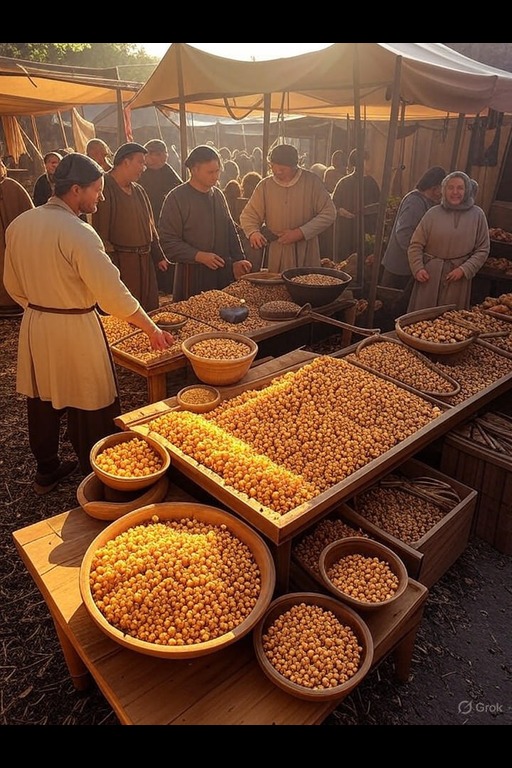
Beans are a staple crop cultivated in the sun-drenched expanses of the savanna and the arid stretches of tropical dry forests. These versatile legumes thrive in diverse soil types and are deeply integrated into local agricultural practices. Seasonal variations in climate and cultivation techniques influence both their quality and overall yield. Farmers often trade surplus beans with neighboring regions, while preserved varieties are highly sought after for extended journeys and winter months.
Universal
Biomes
Politics
Alignments
Races
Resources
Classes
Elevations
Religions
World
No accessible MAPs found.
Biome
Politics
Alignment
Race
Resource
Class
HeightMap
Beans
Detailed Description
Within the sprawling landscapes of the savanna and the vibrant ecosystems of tropical dry forests, beans emerge as a vital agricultural resource. Their cultivation is shaped by a symphony of environmental factors, including soil composition and seasonal weather patterns. Farmers carefully select bean varieties that are best suited for their specific conditions, employing techniques passed down through generations. The cultivation process is often a communal effort, where families and local communities come together to plant, tend, and harvest the crops. This shared labor not only strengthens community ties but also enhances the overall yield of the harvest. The quality of beans can vary significantly depending on the methods used during cultivation and the conditions they face throughout their growing season. Irrigation practices, pest management, and soil enrichment all play critical roles in determining the flavor and size of the beans. Additionally, the timing of the harvest has a direct impact; beans left too long on the vine may lose their optimal taste and texture. After harvesting, beans undergo various processing methods to ensure their longevity and enhance their culinary potential. Techniques such as drying, fermenting, and spicing help to preserve the beans, allowing them to be enjoyed long after the growing season has ended. Trade is a significant aspect of the bean economy, with surplus beans exchanged for other goods and resources. Merchants and traders often travel great distances to procure high-quality beans, particularly those that have been preserved for durability. Dried beans, for example, are favored for their long shelf life and versatility in cooking, while fermented and spiced varieties find their way into numerous culinary traditions, elevating dishes with their complex flavors. Candied beans, a rare treat, are crafted for special occasions, showcasing the ingenuity of local cooks in transforming a simple crop into a delicacy. Overall, the significance of beans extends beyond mere sustenance. They embody the resilience and adaptability of communities living in challenging environments, serving as a crucial resource in agriculture, cuisine, and trade. As a cornerstone of local economies, beans reflect the intricate relationships between people and their land, rooted in tradition and sustained by innovation.
Examples
Numerous culinary delights arise from the humble bean, showcasing its versatility in various forms. Dried beans serve as a foundational ingredient in hearty stews and soups, whereas preserved beans maintain their flavor and texture for use in dishes throughout the year. Fermented beans contribute a unique tang to sauces and condiments, enhancing meals with their depth of flavor. Spiced beans are often featured in local festivities, celebrated for their aromatic profiles, while candied beans provide a sweet indulgence enjoyed on special occasions. Each preparation highlights the creativity and resourcefulness inherent in culinary traditions.