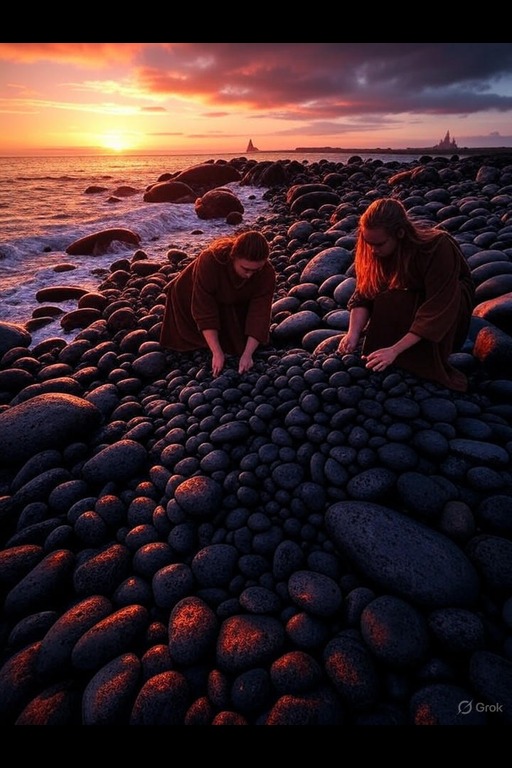
Basalt pebbles are naturally occurring stones found along ocean shores, shaped by the relentless action of waves and tides. Their distinctive dark hue and sturdy nature make them highly sought after for various industries. Harvesters, skilled in the art of collection, gather these pebbles with care, ensuring sustainable practices that protect local ecosystems. The availability of basalt pebbles has led to the establishment of settlements that thrive on their trade and craftsmanship.
Universal
Biomes
Politics
Alignments
Races
Resources
Classes
Elevations
Religions
World
No accessible MAPs found.
Biome
Politics
Alignment
Race
Resource
Class
HeightMap
Basalt Pebbles
Detailed Description
Basalt pebbles, formed through volcanic activity and shaped by the forces of nature, are a common sight along marine coastlines. Over time, these stones are smoothed and polished by the ceaseless movement of water, resulting in a material that is both visually appealing and remarkably durable. Their characteristic dark coloration, ranging from deep blacks to shades of grey, gives them a unique aesthetic that artisans and builders appreciate. Due to their abundance in certain regions, they are often collected by local inhabitants, who have honed their methods of extraction to ensure that the delicate balance of the ecosystem remains intact. The process of gathering basalt pebbles typically demands a keen understanding of the local tides and weather patterns, as the best harvesting times align with specific seasonal changes. Skilled gatherers take into account not only the abundance of pebbles but also the health of the surrounding environment, selecting sites that allow for regeneration. This thoughtful approach to collection supports both the sustainability of the resource and the economic stability of nearby communities, which often rely on the trade of basalt-derived products. The stones are transported to workshops where they undergo further refinement, transforming into various goods that serve functional and decorative purposes. In the realm of masonry and construction, basalt pebbles are prized for their strength and resistance to wear. They can be processed into cut blocks for building, paving stones for pathways, or even ground into gravel for various structural uses. Sculptors often favor basalt for its ability to hold fine details, allowing for the creation of intricate statues that endure the test of time. The versatility of these pebbles extends beyond mere construction; they find their way into the hands of artisans who craft beautiful pieces that reflect the natural beauty of their origin. This combination of practicality and artistry enhances the value of basalt pebbles, solidifying their place in trade and local economies.
Examples
Common products crafted from basalt pebbles include cut blocks used in sturdy constructions, paving stones that create attractive pathways, and sculptures that showcase the skill of local artisans. Additionally, grindstones made from these pebbles serve as essential tools for various industries, providing durability and functionality. The adaptability of basalt allows it to be utilized in multiple contexts, from everyday practical applications to artistic expressions, illustrating its significance in local trade and craftsmanship.