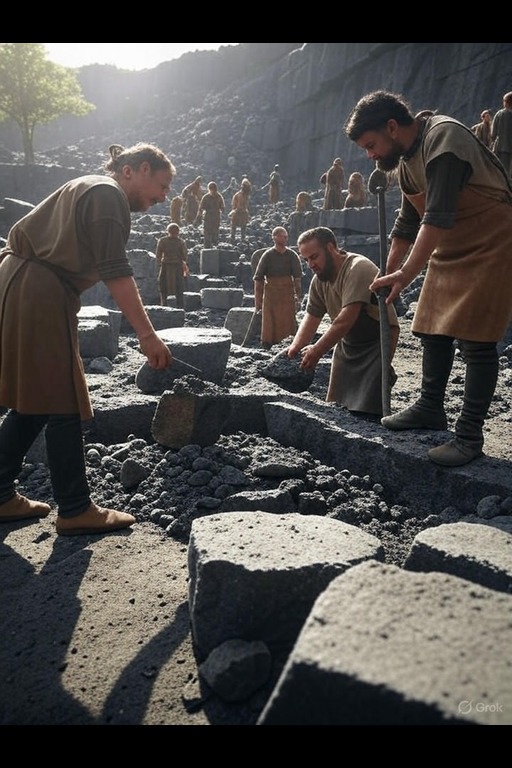
Basalt is a dense volcanic rock formed through the rapid cooling of lava, primarily found in arid desert regions. Its robust nature makes it a favored material for various construction and artistic endeavors. Harvesters skillfully extract this resource with careful attention to sustainability, ensuring that local stocks remain viable for future generations. The presence of basalt often influences settlement patterns, with communities establishing themselves near abundant sources to support local industries and trade.
Universal
Biomes
Politics
Alignments
Races
Resources
Classes
Elevations
Religions
World
No accessible MAPs found.
Biome
Politics
Alignment
Race
Resource
Class
HeightMap
Basalt
Detailed Description
Basalt is renowned for its strength and durability, making it an essential resource in several industries, including masonry, construction, and sculpting. The rock's distinctive dark hue and fine-grained texture add aesthetic value, allowing artisans to create a wide range of products. From elegantly cut blocks used in sturdy edifices to intricately carved statues that tell stories of the land, basalt showcases the ingenuity of craftsmen who work with it. Its availability in various forms, such as gravel and paving stones, allows for diverse applications, catering to both functional and artistic needs. Harvesting basalt is a skillful endeavor, requiring knowledge of the landscape and an understanding of seasonal trends. Workers often venture to quarries during cooler periods, ensuring they can gather the material without causing undue harm to the surrounding environment. Careful techniques are employed to extract basalt in a way that minimizes waste and preserves the integrity of the site. This sustainable approach not only benefits the current population but also safeguards resources for future use. The trade of basalt and its products forms a vital part of local economies, fostering connections between communities and facilitating the exchange of goods. Settlements that spring up near basalt deposits often thrive, as the resource attracts skilled laborers and artisans. Markets teem with the fruits of basalt, each item reflecting the skill and artistry of its maker. As such, basalt is more than just a building material; it is a cornerstone of cultural expression and economic vitality, binding communities together through shared craftsmanship and trade.
Examples
Cut blocks of basalt are commonly used in constructing sturdy foundations and walls, offering both resilience and a striking appearance. Artisans craft statues that depict significant figures or abstract forms, each piece telling a story of creativity and culture. Additionally, grindstones made from basalt serve a practical purpose in various industries, while gravel and paving stones provide essential materials for roadways and pathways. The versatility of basalt solidifies its status as a fundamental resource across multiple facets of life.