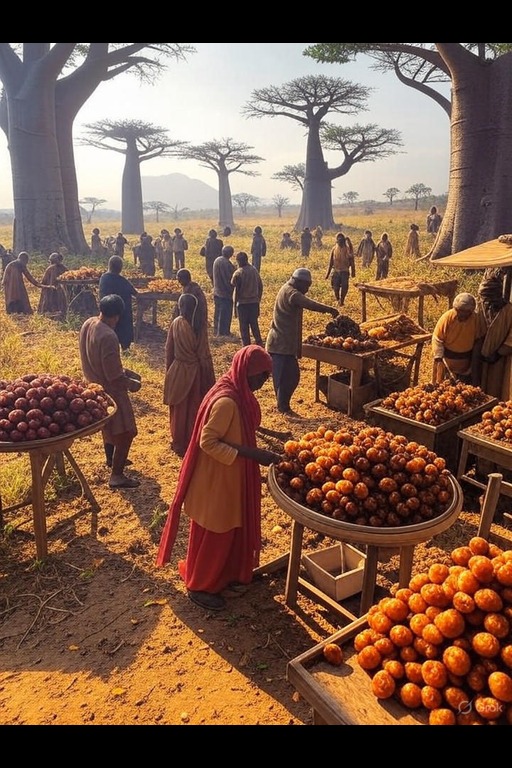
Baobab Fruit is a unique resource cultivated in the expansive savanna, where the interplay of climate, soil, and traditional practices shapes its characteristics. The seasonal techniques employed in its cultivation significantly influence both the quality and yield, leading to a diverse array of available products. Surplus harvests are often traded with neighboring regions, enhancing its value in local economies. Caravans especially favor preserved forms of the fruit for their journeys and winter supplies, ensuring its presence across vast distances.
Universal
Biomes
Politics
Alignments
Races
Resources
Classes
Elevations
Religions
World
No accessible MAPs found.
Biome
Politics
Alignment
Race
Resource
Class
HeightMap
Baobab Fruit
Detailed Description
The cultivation of Baobab Fruit thrives in the sun-drenched savanna, where the trees themselves stand as iconic sentinels of the landscape. These hardy trees adapt well to the region's climate, enduring both the dry seasons and the occasional rains. The fruit, which is encased in a tough outer shell, contains a nutrient-rich pulp that is treasured for its culinary versatility. Farmers often harvest the fruit during the peak growing season, employing traditional techniques passed down through generations to ensure optimal ripeness and flavor. The methods of harvesting and processing Baobab Fruit vary between communities, each adding their own unique touch to the fruit's final form. After being collected, the fruit can be dried to enhance its shelf life and flavor profile, or transformed into products such as jams and juices. Dried Baobab Fruit is particularly popular for its sweet, tangy taste, making it a favored ingredient in various culinary applications. For those who seek a more indulgent treat, candied forms of the fruit are crafted, showcasing both the natural sweetness and the rich texture of the pulp. Trade plays a significant role in the distribution of Baobab Fruit, with merchants often transporting the cherished resource across long distances to reach markets in need. This trade not only supports local economies but also fosters connections between different regions, as the fruit becomes a staple in many diverse diets. The preservation techniques used by merchants to extend the fruit's usability make it an essential item for caravans embarking on lengthy voyages, ensuring sustenance and nutrition during travel. In culinary circles, Baobab Fruit is gaining recognition for its distinctive flavor and health benefits, inspiring innovative recipes and beverages. From refreshing juices to hearty wines, the fruit is increasingly featured in contemporary cuisine, bridging the gap between traditional uses and modern tastes. As awareness of Baobab Fruit spreads, it holds the potential to enhance dietary practices far beyond the savanna, celebrating its role as both a nutritious food source and a symbol of cultural heritage.
Examples
Various products derived from Baobab Fruit illustrate its versatility and appeal. Dried Baobab Fruit serves as a nutritious snack, while Baobab Fruit jam offers a delightful spread enjoyed on breads and pastries. For those seeking a refreshing drink, Baobab Fruit juice provides a tangy alternative to traditional beverages, and Baobab Fruit wine presents a unique twist for connoisseurs. Candied Baobab Fruit is often enjoyed as a sweet treat, showcasing the fruit's rich flavors and textures.