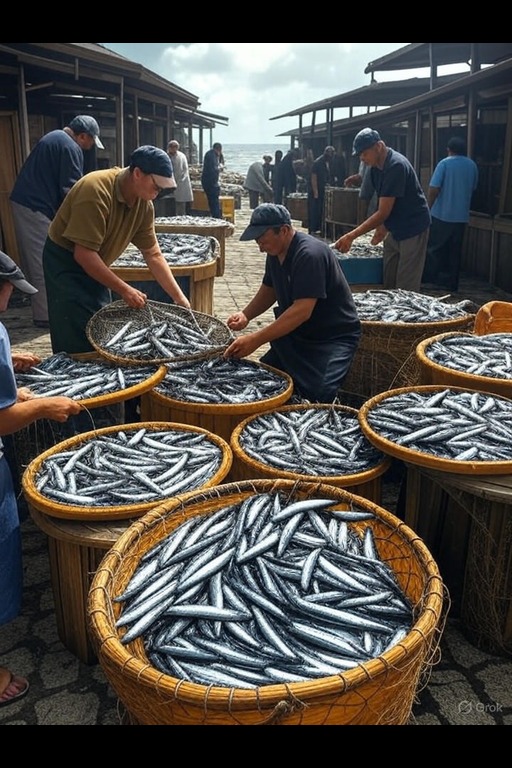
Anchovies are small, schooling fish that thrive in the vast expanse of the ocean. Cultivated or harvested through meticulous methods, these fish are influenced by seasonal changes and local traditions, which in turn affect their flavor and quality. The preservation of anchovies is a well-honed craft, with various techniques employed to maintain their freshness and intensity. Regions specializing in this resource often engage in trade, exchanging preserved forms for long voyages and seasonal storage.
Universal
Biomes
Politics
Alignments
Races
Resources
Classes
Elevations
Religions
World
No accessible MAPs found.
Biome
Politics
Alignment
Race
Resource
Class
HeightMap
Anchovies
Detailed Description
The cultivation and harvesting of anchovies take place in nutrient-rich waters, where these fish flourish in large schools. They are typically found in coastal areas, drawn to the abundant plankton that serves as their primary food source. The methods for catching anchovies vary widely, often shaped by local customs and environmental considerations. Fishermen employ nets or traps during peak seasons when the fish are most plentiful, ensuring a sustainable yield while respecting the delicate marine ecosystem. Seasonal variations can significantly influence the characteristics of the catch, with warmer waters often yielding a more robust flavor profile. Preservation is a critical aspect of anchovy processing. Techniques such as salting, smoking, and pickling not only enhance the flavor but also extend the shelf life of these fish. Each method imparts a unique taste and texture, making preserved anchovies a versatile ingredient in various culinary applications. The process of turning freshly caught anchovies into preserved products is often regarded as an artisanal craft, with families passing down their skills through generations. This dedication to quality ensures that the anchovies retain their distinct qualities, whether enjoyed fresh or as part of a longer-lasting product. Trade in anchovies thrives, with surplus production often exchanged between regions. Caravans transporting these preserved goods navigate complex routes, ensuring that anchovies reach distant markets in optimal condition. The demand for anchovies extends beyond simple consumption; their rich flavors enhance numerous dishes and culinary traditions across various cultures. Chefs and home cooks alike celebrate anchovies for their ability to elevate flavors, whether they are incorporated into sauces, stews, or enjoyed as a standalone delicacy. The impact of anchovies on local economies is significant, as their trade supports livelihoods and fosters connections between communities. In summary, anchovies are not merely a source of sustenance but a vital link within the broader framework of marine resource management, culinary tradition, and trade networks. Their journey from ocean to plate encapsulates a rich tapestry of human ingenuity and respect for the natural world.
Examples
Various products derived from anchovies showcase their versatility and enduring appeal. Smoked anchovies provide a rich, smoky flavor, making them a sought-after ingredient in gourmet kitchens. Salted anchovies are treasured for their intense umami, often used in sauces and dressings. Pickled anchovies delight with a tangy zest, ideal for appetizers or as a flavorful addition to salads. Furthermore, anchovy oil serves as a potent base for dressings or marinades, encapsulating the essence of the sea in every drop.