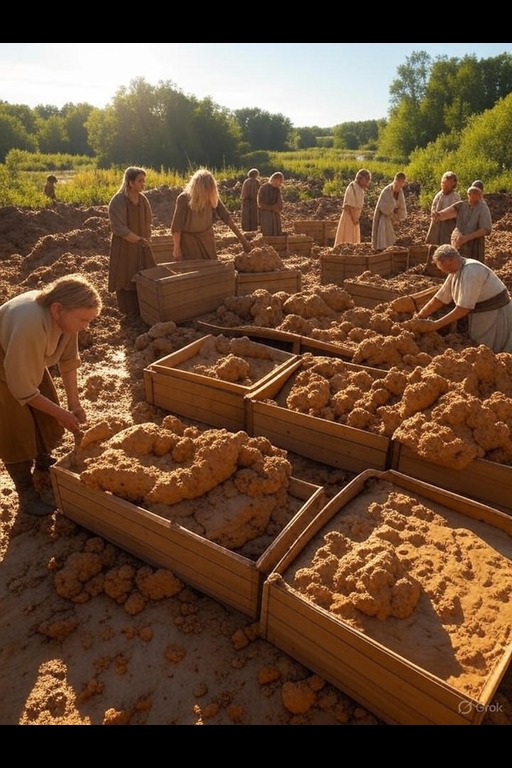
Alluvial Clay is a natural resource formed from the sedimentation in wetland environments, primarily found along riverbanks and floodplains. It is collected from outcrops and bars, where it is graded and sorted based on quality. This versatile material is essential in various industries, including masonry, pottery, and construction. Additionally, it serves as a valuable trade good, often sought after for its utility in crafting durable products.
Universal
Biomes
Politics
Alignments
Races
Resources
Classes
Elevations
Religions
World
No accessible MAPs found.
Biome
Politics
Alignment
Race
Resource
Class
HeightMap
Alluvial Clay
Detailed Description
Alluvial Clay derives from the continuous deposition of sediments in wetland regions, where watercourses meander and overflow. Over time, this sediment compacts and transforms into a rich, malleable substance. Characterized by its fine texture and plasticity when moist, Alluvial Clay is particularly favored for its workability, making it a staple for artisans and builders alike. It is typically extracted from lower riverbanks and areas where floodwaters recede, leaving behind layers of nutrient-rich soil that have accumulated over seasons or even centuries. After extraction, Alluvial Clay is sorted and graded on-site to determine its suitability for various applications. High-quality clay is packed into sturdy crates for transport, while smaller particles, known as fines, are dried and bagged for use in kilns or as mortar. This process ensures that the material maintains its integrity, allowing it to be utilized in a range of products, from bricks and tiles to ceramics. The construction industry relies heavily on Alluvial Clay for its foundational elements, as it is both abundant and reliable. In the realm of pottery, Alluvial Clay is transformed into exquisite items that showcase both functionality and artistry. Skilled artisans mold and shape the clay, often producing unique ceramics that are valued for their aesthetic appeal and durability. The versatility of this resource extends to trade, where it is exchanged not only for building materials but also for decorative objects, enhancing cultural exchanges between communities. The constant demand for Alluvial Clay ensures its role as a cornerstone of various economic activities, contributing to local and regional prosperity.
Examples
Common products derived from Alluvial Clay include bricks and tiles, which form the backbone of many architectural structures. The pottery crafted from this material is often distinguished by its rich textures and vibrant glazes, appealing to collectors and everyday users alike. Additionally, cut stone produced from Alluvial Clay finds its place in both practical and ornamental applications. As a trade good, it serves as a crucial resource, fostering economic relationships through its widespread utility and availability.