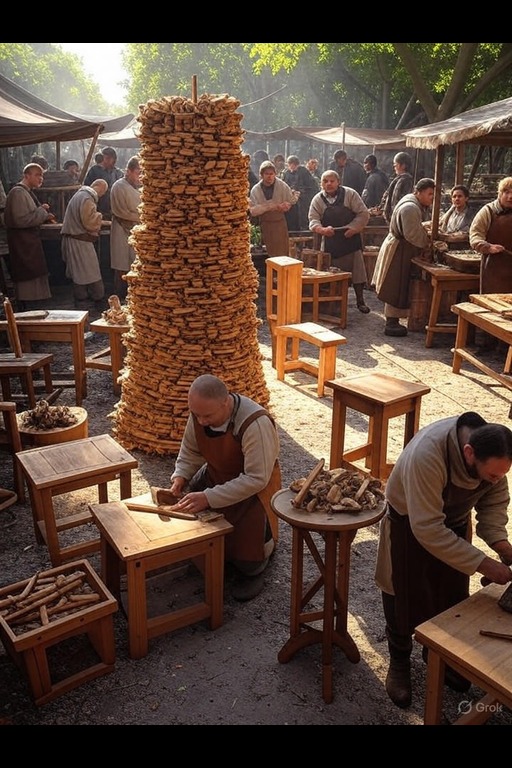
Alder Poles are a vital resource found naturally in temperate wet grasslands. Their unique properties make them highly sought after for various industries, including logging, construction, and carpentry. Skilled harvesters carefully gather the poles, ensuring that local stocks remain sustainable. Additionally, many settlements thrive in proximity to these valuable resources, supporting trade and craftsmanship.
Universal
Biomes
Politics
Alignments
Races
Resources
Classes
Elevations
Religions
World
No accessible MAPs found.
Biome
Politics
Alignment
Race
Resource
Class
HeightMap
Alder Poles
Detailed Description
Alder Poles are harvested from a tree species that thrives in the moist, rich soils typical of temperate wet grasslands. The wood is characterized by its light weight and flexible structure, making it an ideal choice for a range of applications. It is commonly used in construction, where its resilience and ease of working lead to its incorporation in beams and planks. Craftspeople favor it for the production of tools and furniture, as well as for creating intricate carvings that showcase the wood's natural beauty. The poles’ ability to resist decay when submerged adds to their versatility, particularly in shipbuilding and other water-related ventures. The process of harvesting Alder Poles is governed by the seasons and the expertise of the gatherers. During certain times of the year, the trees are more easily stripped of their bark and limbs, ensuring that the poles can be extracted with minimal impact on the surrounding ecosystem. This careful approach helps maintain a sustainable supply of Alder, allowing local communities to rely on this resource without depleting it. Experienced harvesters understand the rhythms of nature and the importance of preserving local stocks, which fosters a deep respect for the land and its offerings. In addition to their practical uses, Alder Poles play a significant role in the local economy. Trade routes are often established around areas abundant with these trees, creating hubs of activity where craftspeople and traders converge. The economic benefits extend beyond mere timber; the production of by-products such as charcoal and resin pitch contributes to a thriving marketplace. This interdependence between resource and community highlights the importance of Alder Poles in supporting both livelihoods and local culture, as artisans channel their skills into crafting goods that are valued far and wide.
Examples
In various settlements, craftsmen transform Alder Poles into durable planks and beams used in construction projects. The wood serves as a primary material for crafting tools that are essential for daily life. Charcoal produced from Alder is prized for its quality, while resin pitch finds application in waterproofing and sealing. The versatility of this resource underscores its significance, as it supports both practical needs and artistic expressions, reinforcing the connection between nature and human endeavor.