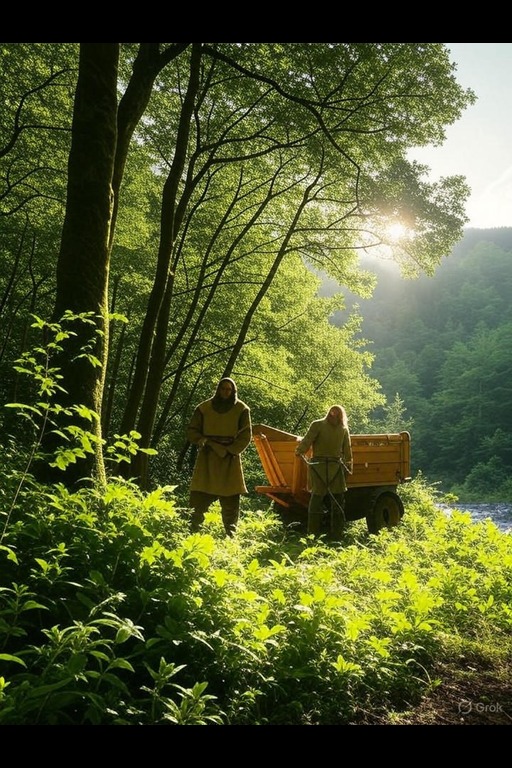
Alder for Charcoal is gathered in temperate rainforests, where its resilient wood thrives amidst the damp environment. This resource is primarily collected using simple tools and requires minimal processing. Craftsmen and builders value it for its ability to produce high-quality charcoal, essential for various industries. The sustainable practice of sorting only sound material ensures that the surrounding ecosystem remains undisturbed.
Universal
Biomes
Politics
Alignments
Races
Resources
Classes
Elevations
Religions
World
No accessible MAPs found.
Biome
Politics
Alignment
Race
Resource
Class
HeightMap
Alder for Charcoal
Detailed Description
The process of gathering Alder for Charcoal begins with a careful selection of suitable trees, which are often found in clusters within the rich undergrowth of temperate rainforests. Harvesters utilize basic tools to extract branches and small trunks, focusing on the most resilient specimens. The wood is then transported to designated sorting areas, where it is assessed for quality. Only the intact, unblemished pieces are retained for charcoal production, while damaged or rotten wood is left to decompose naturally, enriching the forest floor and supporting the local ecosystem. Charcoal derived from Alder is prized for its unique burning qualities, which include a comparatively mild flavor that is appreciated in culinary applications. Additionally, it produces a steady, prolonged heat, making it a favored choice among artisans and builders for use in forge work and other heat-dependent processes. The lightweight nature of Alder wood contributes to the ease of transport, allowing for efficient distribution in trade networks. Artisans often favor this charcoal for crafting fine goods, as it can be used to forge tools and weapons that require a precise, controlled temperature during the heating process. Sustainable harvesting practices are crucial to ensure that the supply of Alder for Charcoal remains viable. Gatherers are trained to recognize the signs of healthy trees and understand the delicate balance of the forest ecosystem. By prioritizing the health of the forest, they ensure that this resource can be used for generations to come. The collaboration between gatherers and local communities often fosters a deep respect for the natural world, promoting conservation efforts alongside resource extraction. This symbiotic relationship helps to maintain the integrity of the temperate rainforest while supporting various industries reliant on Alder-derived products. In the realm of construction, Alder for Charcoal is utilized not only for the production of charcoal but also as a building material in its raw form. The wood is valued for its lightweight yet sturdy characteristics, making it suitable for framing and structural elements. Furthermore, the trade in Alder products extends beyond charcoal, as artisans craft a variety of tools and goods that embody the unique qualities of this abundant resource. The versatility of Alder ensures that its impact is felt across multiple sectors, from crafting to construction and beyond.
Examples
Craft goods crafted from Alder for Charcoal include beautifully finished handles for tools, where the wood's natural grain adds aesthetic appeal. In construction, it serves as a lightweight yet durable framing material, allowing builders to create strong structures without excessive weight. Trade goods made from Alder are often sought after for their quality, making them valued items in bustling marketplaces. Additionally, the tools forged using Alder-derived charcoal exhibit exceptional durability and performance, showcasing the resource's importance in both craft and industry.