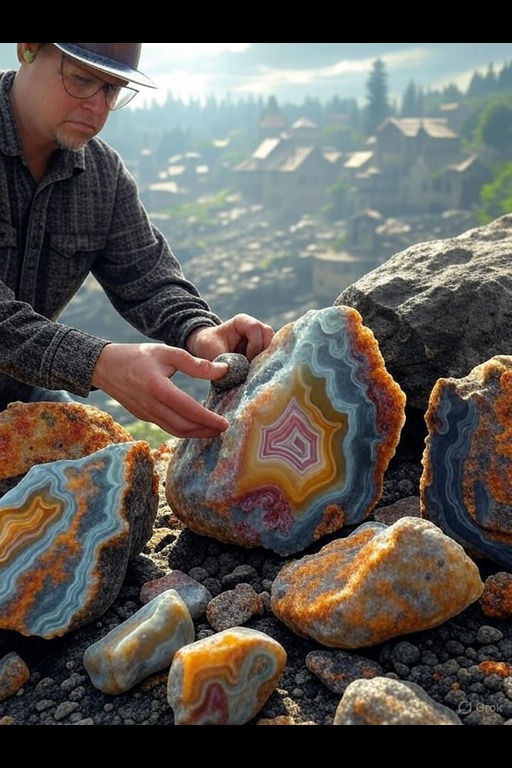
Agate is a striking mineral that forms in the arid expanse of xeric scrublands, where geological forces have sculpted its vibrant layers over millennia. This gemstone is highly sought after by artisans and traders alike for its aesthetic appeal and durability. Miners often brave the rugged terrain to extract this prized resource, knowing that the process can be fraught with challenges. Agate’s diverse coloration and unique patterns make it a favored choice for jewelry and ornamental items, as well as for use in various crafts and trades.
Universal
Biomes
Politics
Alignments
Races
Resources
Classes
Elevations
Religions
World
No accessible MAPs found.
Biome
Politics
Alignment
Race
Resource
Class
HeightMap
Agate
Detailed Description
Agate is a banded variety of chalcedony, a mineral that emerges from the slow cooling of silica-rich volcanic rocks. Its formation is a testament to the passage of time, as layers build up over centuries, creating fascinating designs that can vary greatly from one specimen to another. The mineral often exhibits a range of colors, from the warm tones of red and orange to the cooler blues and greens, each hue telling a story of its environmental origin and the conditions under which it was shaped. These geological processes not only give agate its visual appeal but also contribute to its resilience, making it ideal for crafting durable items. Craftsmen and artisans hold agate in high esteem for its versatility and beauty. The stone can be polished to a high sheen or left in its natural form, appealing to varying tastes and styles. Jewelry makers frequently incorporate agate into their creations, fashioning it into rings, pendants, and bracelets that resonate with wearers due to its earthy elegance. In addition to jewelry, agate is also used in the creation of ritual implements, where its unique patterns may be believed to enhance the significance of the items, fostering a connection to the earth and its history. In the realm of trade, agate is a valuable commodity. Its durability and aesthetic qualities ensure that it holds substantial worth in markets where artisans seek high-quality materials. The extraction of agate typically requires skilled miners who are attuned to the rocky landscapes where it is found. Alongside its economic value, the process of mining agate can be treacherous, as the terrain is often unforgiving, demanding both physical endurance and expertise. Thus, those who seek out this mineral must be prepared for the rigors of the environment. Alchemy also benefits from this mineral, as its distinctive properties lend themselves well to various formulations. While not inherently magical, the stone's unique geological formation can inspire a sense of connection to natural processes, appealing to those who value the deeper implications of their materials. This aspect further enriches agate's significance in cultural practices and artistic expressions throughout the regions where it is found, reflecting the intricate relationship between humanity and the natural world.
Examples
Numerous products are crafted using agate, showcasing its versatility and appeal. Jewelry items such as rings and amulets capture the stone's natural beauty while allowing wearers to carry a piece of the earth's history with them. Artisans also produce agate wands and enchanted orbs, often incorporating the mineral into ceremonial or decorative uses. Talismans made from agate are popular for their intricate patterns and vibrant colors, which can vary widely, ensuring that each piece is unique. This remarkable mineral thus finds its place in a wide range of artistic and practical applications.