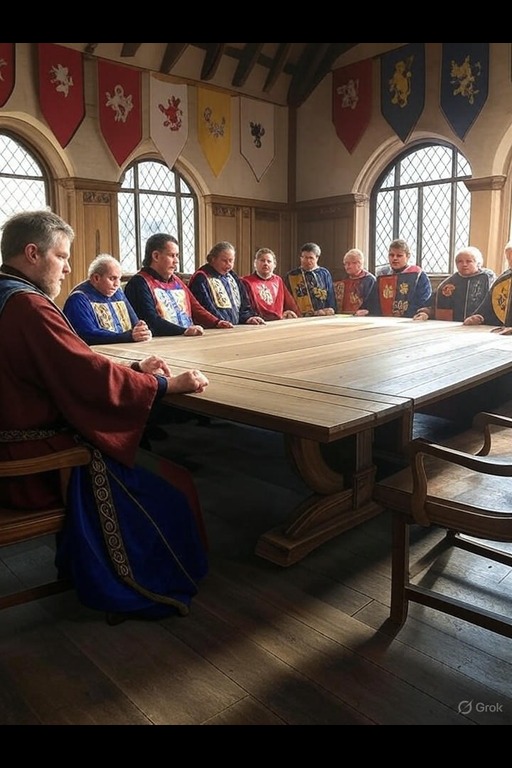
A United Republic allows diverse regions to govern collectively while maintaining individual autonomy, balancing local interests with a central authority to ensure stability and representation.
Universal
Biomes
Politics
Alignments
Races
Resources
Classes
Elevations
Religions
World
No accessible MAPs found.
Biome
Politics
Alignment
Race
Resource
Class
HeightMap
United Republic
Detailed Description
In a United Republic, various regions or provinces come together under a shared framework of governance that emphasizes collective decision-making while respecting local autonomy. Power is typically distributed among elected representatives from each province, creating a council or assembly that acts as a central body for legislative duties. This council is responsible for setting overarching policies and addressing issues that affect the republic as a whole, yet it must navigate the diverse interests of its constituent regions. Leadership roles within the council may shift regularly, often determined by a rotational system or by election, ensuring that various regions have opportunities to influence governance over time. The succession of power within the United Republic is often dictated by the principles of democracy and representation. When a leader or council member steps down, successors are chosen through elections or appointed from within the council based on established protocols. This practice aims to maintain stability while fostering civic engagement among citizens, who are encouraged to participate in the electoral process. However, the frequent turnover of leadership may also lead to inconsistency in policy implementation, creating challenges for long-term strategic planning. Citizens experience a blend of local governance and centralized authority, often feeling connected to their representatives while also yearning for more direct influence over broader decisions. Institutions in a United Republic include assemblies, councils, and committees that handle various aspects of governance, such as law enforcement, taxation, and infrastructure development. Each province may maintain its own local councils that address community-specific needs, while the central council manages laws that apply across the republic. Taxation is commonly structured to account for both local and national needs, leading to discussions about equitable distribution of resources. The military may serve dual roles, with a national force responsible for defense and regional militias handling local security, fostering a sense of shared responsibility for safety and order. Additionally, religious organizations may play influential roles, providing guidance and moral leadership within local communities while also participating in broader discussions at the national level. While the United Republic offers a framework for inclusivity and representation, it grapples with inherent tensions. Disparities between wealthier and less affluent provinces can spark friction, especially when it comes to resource allocation and policy priorities. Local identities often clash with national initiatives, leading to debates over cultural representation and autonomy. Daily life for citizens in a United Republic can be shaped by these dynamics, as they navigate the intersection of local customs and national legislation, affecting everything from trade practices to community activities.
Examples
A council meeting is interrupted by a heated debate over land use policies that favor urban development over rural preservation. Citizens in a remote province organize protests demanding greater representation in the central assembly. A charismatic leader emerges in a border territory, rallying support against perceived neglect from the capital. Religious leaders seek to influence legislation on moral grounds, causing tensions within the council. A resource-rich region argues for a larger share of national funds to address infrastructure deficits. Regional militias band together to defend against incursions, challenging the authority of the central military.