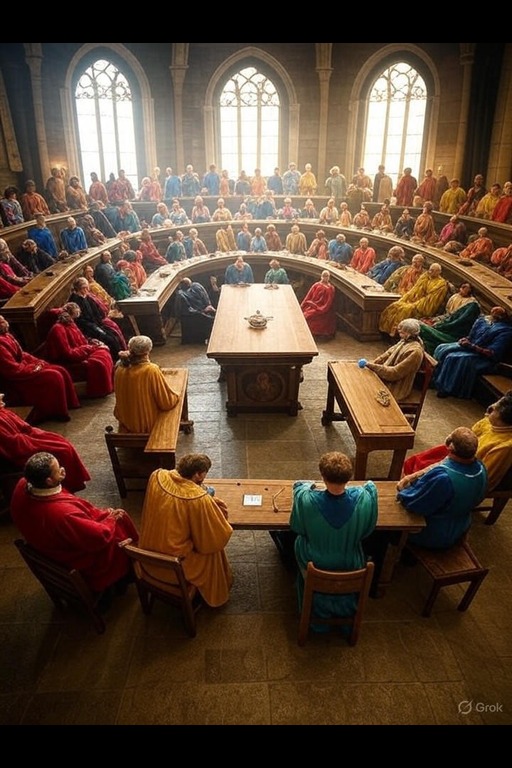
The United Provinces is a political structure where multiple provinces maintain autonomy while uniting under a central governing body, promoting regional representation and collaboration in governance.
Universal
Biomes
Politics
Alignments
Races
Resources
Classes
Elevations
Religions
World
No accessible MAPs found.
Biome
Politics
Alignment
Race
Resource
Class
HeightMap
United Provinces
Detailed Description
The United Provinces operates under a unique balance of power, where each province retains a significant degree of autonomy while participating in a collective governance framework. Authority is distributed among provincial leaders known as governors, who are elected through local councils composed of representatives from their respective regions. These councils are responsible for local legislation and administration, allowing for tailored governance that reflects the diverse needs and customs of the provinces. The central assembly, formed by delegates from each province, serves as the overarching body to address issues that affect the union, including matters of defense, trade, and inter-provincial relations. This assembly typically convenes in a capital designated by mutual agreement, where they negotiate and debate policies that require consensus among the provinces. Decisions are often made through a voting process that ensures proportional representation. However, the influence of larger provinces can sometimes overshadow the voices of smaller ones, leading to tensions that may require mediation or reform efforts. Succession in the United Provinces can take various forms, often dictated by regional traditions and laws. Leadership within provinces may be hereditary, elected, or appointed, depending on local customs. In some provinces, a council of elders or a ruling family may hold more influence, while in others, democratic practices may prevail. Disputes over succession can lead to conflict when provinces disagree on who should represent them in the central assembly, particularly when a province’s governor is contested. This occasional upheaval can lead to shifts in allegiances among provinces, impacting their collaboration on critical issues. Socially, the citizens of the United Provinces experience varied governance styles, reflected in regional laws and customs. Daily life can differ significantly depending on one’s location, as some provinces emphasize trade and commerce, while others focus on agricultural practices or spiritual traditions. Taxation often reflects these local economies, with governors having the authority to levy taxes that fund provincial initiatives, such as infrastructure and public services. However, conflicts can arise over perceived inequities in tax burdens, especially if wealthier provinces are seen as contributing less to the collective needs. The interplay between local governance and central authority shapes the cultural landscape, creating a rich tapestry of identities and political alignments within the union.
Examples
A newly appointed governor faces opposition from a powerful merchant guild resistant to reforms. A council of provinces debates the increase of central military funding to address border threats. An ancient rivalry between two provinces flares up during a festival celebrating their shared heritage. A small province launches a campaign for greater representation in the central assembly, stirring a wider movement. Tensions rise as a provincial leader seeks to impose stricter trade regulations that threaten neighboring economies.