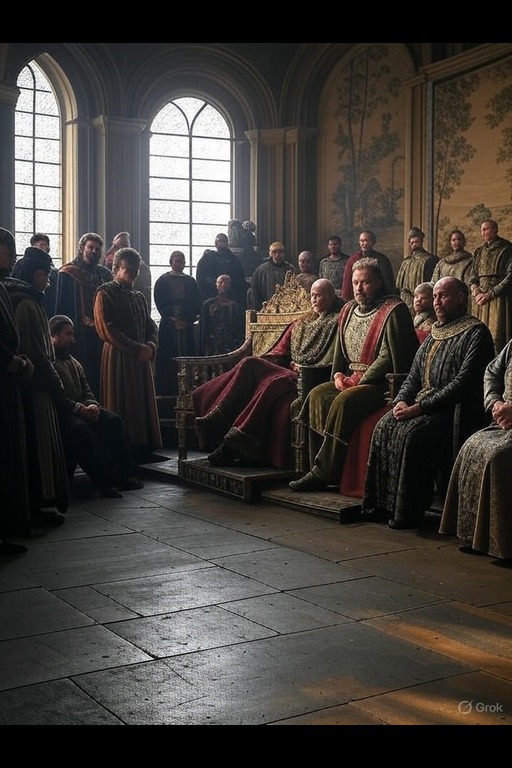
In a Tsardom, a singular monarch wields absolute power, often guided by a council of nobles, with succession typically defined through hereditary lines, fostering a complex social hierarchy.
Universal
Biomes
Politics
Alignments
Races
Resources
Classes
Elevations
Religions
World
No accessible MAPs found.
Biome
Politics
Alignment
Race
Resource
Class
HeightMap
Tsardom
Detailed Description
The governance of a Tsardom centers around an autocratic ruler known as the Tsar, who possesses ultimate authority over the realm. Power is concentrated in the hands of the monarch, who often claims divine right, believing their rule to be sanctioned by higher powers. This system encourages fidelity and reverence among subjects, fostering a culture of loyalty. The Tsar is advised by a council composed of influential nobles, military leaders, and sometimes clergy, who provide counsel on matters of state, war, and religion. These advisors are pivotal in translating the Tsar's will into edicts and policies that shape daily life for the populace. Succession in a Tsardom typically follows hereditary lines, with the throne passing within a designated royal family, though the specifics can vary. In some cases, the Tsar may designate a favored heir, while in others, the council may play a role in determining the successor, leading to potential power struggles. This uncertainty can create a volatile atmosphere, as contenders may vie for influence, seeking to secure their position or that of their progeny. The law and taxation system is often arbitrary, with the Tsar holding the power to levy taxes at will, leading to frequent burdens on commoners and unrest among the lower classes. Nobles may be granted tax exemptions or privileges, further widening social divides. The daily experience of subjects under a Tsardom can range dramatically based on their social standing. Peasants may toil under harsh conditions, paying heavy taxes and providing labor for the nobility, while merchants and artisans enjoy relative freedom, albeit still under the watchful eye of the Tsar’s officials. The presence of a military often underscores this governance, with troops serving to enforce the Tsar's will, quell dissent, and protect borders, fostering a sense of both security and oppression among the populace. Religious institutions may also play a significant role, often aligning with the Tsar to bolster legitimacy while providing spiritual guidance to citizens, reinforcing the Tsar's divine authority. The intertwining of military, nobility, and religion creates a complex tapestry of power that defines the lived experience of those within the Tsardom.
Examples
A discontented merchant class begins to rally for more representation in the Tsar's council. An ambitious noble seeks to undermine a rival by sowing dissent among the peasantry. The Tsar faces pressure from religious leaders to address a growing crisis of faith among the populace. A remote village resists the imposition of new taxes, triggering a military response. A sudden death in the royal family sparks a fierce struggle for succession among competing factions.