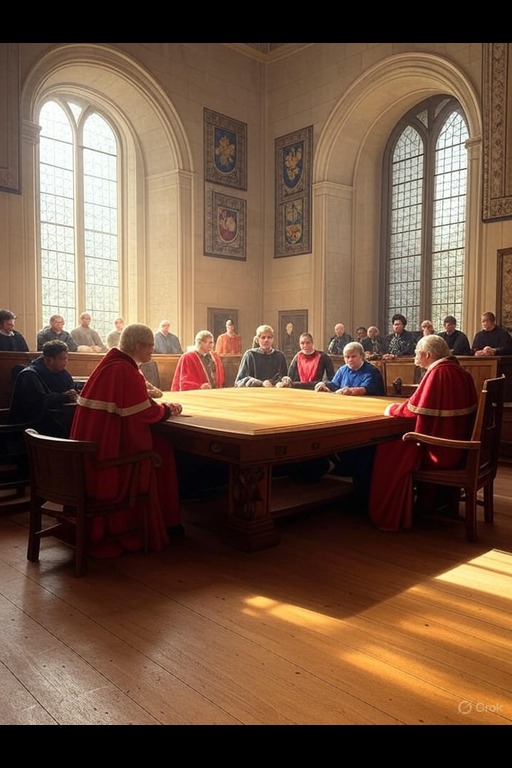
A tetrarchy functions as a political system where four leaders share power, often balancing regional interests while facing challenges in cooperation and unity.
Universal
Biomes
Politics
Alignments
Races
Resources
Classes
Elevations
Religions
World
No accessible MAPs found.
Biome
Politics
Alignment
Race
Resource
Class
HeightMap
Tetrarchy
Detailed Description
In a tetrarchy, governance is divided among four rulers, each typically overseeing a distinct region or aspect of the state. This shared power structure can arise from various origins, such as historical treaties, military victories, or social agreements designed to prevent the concentration of authority in a single individual. Each leader, known for their distinct competencies, often represents a coalition of powerful factions or groups, ensuring that diverse interests are acknowledged in decision-making processes. This arrangement can foster a sense of local governance, as leaders are closely tied to their constituents, though it may also breed competition and conflict among the tetrarchs, particularly over resources and influence. Succession in a tetrarchy can be a complex and contentious affair. While some systems may designate successors based on merit or lineage, others might require consensus among the remaining tetrarchs, leading to power struggles or negotiations that can disrupt governance. The frequency of such conflicts can deeply affect the populace's perception of stability within their government. Daily life under a tetrarchy is marked by the influence of local leaders, as citizens often feel closer to their ruling tetrarch than to the central authority. Laws and taxes may vary significantly between regions, reflecting the priorities and ideologies of individual tetrarchs, which can result in a patchwork of regulations that citizens must navigate. Institutions within a tetrarchic system often include councils that facilitate cooperation among the leaders, though the effectiveness of these bodies can be limited by ongoing rivalries. Military and religious institutions may also play crucial roles, as they can provide support for one tetrarch over another, shaping the political landscape profoundly. Additionally, local magistrates or assemblies may be empowered to address regional issues, creating layers of governance that citizens engage with on a daily basis. This can lead to a sense of empowerment among the populace, but it can also generate confusion and frustration given the inconsistency of laws and the confusion surrounding jurisdiction. Ultimately, the strength of a tetrarchy lies in its ability to balance diverse interests and encourage regional representation, while its weaknesses often stem from the potential for discord among the rulers. Citizens may experience both the advantages of local governance and the drawbacks of instability, leading to a complex relationship with their political system.
Examples
A coastal tetrarch seeks alliances with neighboring maritime provinces to bolster trade. A forested region becomes a refuge for dissenters fleeing political strife among the leaders. Citizens in a border province face fluctuating tariffs due to changing allegiances among the tetrarchs. A ceremonial council of elders is summoned to mediate disputes between rival rulers after a failed agricultural policy. Tensions rise when one tetrarch's military incursions threaten the stability of neighboring realms.