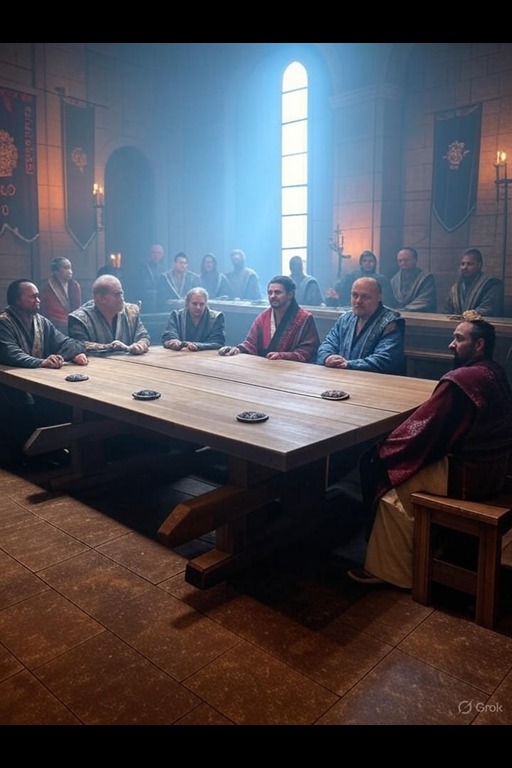
In a Shogunate monarchy, military leaders wield significant power, often overshadowing a ceremonial ruler, with succession typically dictated by bloodlines or martial prowess.
Universal
Biomes
Politics
Alignments
Races
Resources
Classes
Elevations
Religions
World
No accessible MAPs found.
Biome
Politics
Alignment
Race
Resource
Class
HeightMap
Shogunate
Detailed Description
The Shogunate system is characterized by a military government where the shogun, a powerful military leader, exerts control over the land and its people, while a nominal monarch often serves as a figurehead. Power dynamics are heavily influenced by the shogun's military success, alliances, and the loyalty of various samurai clans. In practice, the shogunate maintains authority through a combination of military might, strategic marriages, and the granting of land to loyal vassals. This system inherently intertwines governance with the martial culture, creating a society where honor and loyalty dictate not only the relationships between lords and vassals but also the daily lives of the populace. The shogun's word is often law, with local lords (daimyos) enforcing edicts in their territories while retaining some degree of autonomy to manage local affairs, including taxation and resource distribution. The common citizen may experience a mix of stability and strife, largely dependent on the competence and benevolence of their ruling lord. Succession within a shogunate is typically hereditary but can also involve military prowess or political maneuvering. In the absence of a clear heir, rival factions may vie for power, leading to internal strife and potential civil conflict. Shoguns often establish councils composed of trusted advisors and influential daimyos to assist in governance, with these councils playing a critical role in decision-making processes related to law, trade, and military campaigns. Taxes are usually collected through the local lords, who impose levies on agriculture, trade, and various enterprises, and a portion of these taxes is sent to the shogun as tribute. This system can create significant disparities in wealth and power, often resulting in friction between the ruling elite and common folk. Citizens may find their lives disrupted by military campaigns, local disputes, or the shogun's shifting alliances, but when well-managed, the shogunate can foster a sense of order and cultural flourishing, particularly through patronage of the arts and education. Daily life under a shogunate can vary widely depending on one’s social status and proximity to power. Farmers may find their lands overtaxed, while artisans and merchants can thrive if they align their interests with the ruling lords. The presence of samurai as local enforcers can enforce order, but it can also lead to abuses of power, wherein commoners might feel the weight of martial law bearing down upon them. The loyalty and martial prowess of the samurai class serve as both a shield and a sword—protecting the realm from external threats while simultaneously engaging in internal power struggles that define the political landscape.
Examples
A shogun seeks to expand their territory through alliances with neighboring daimyos. A disgraced samurai plots to reclaim honor and power by overthrowing his corrupt lord. A village faces harsh taxation as its lord funds a costly military campaign. Factions of samurai clash over differing visions for the future of the realm. A merchant family secretly funds a rebellion against their oppressive shogunate rulers.