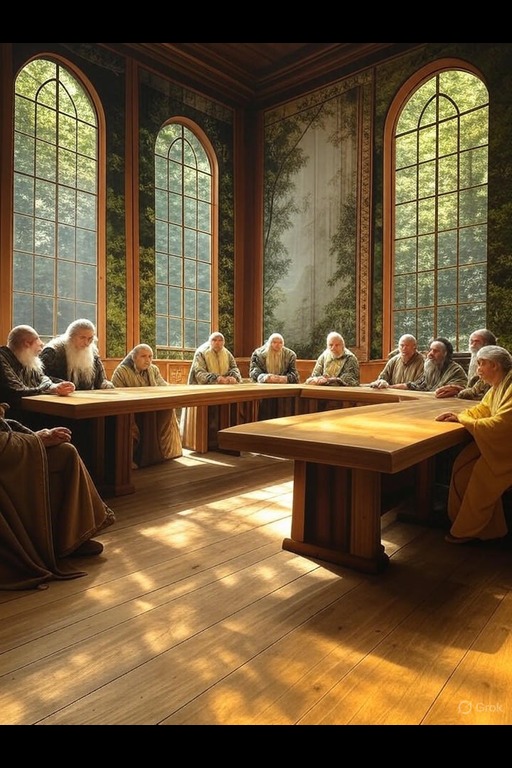
This political structure functions as a protected area focused on conservation and indigenous governance, balancing ecological preservation with local autonomy and cultural practices.
Universal
Biomes
Politics
Alignments
Races
Resources
Classes
Elevations
Religions
World
No accessible MAPs found.
Biome
Politics
Alignment
Race
Resource
Class
HeightMap
Reservation
Detailed Description
The governance of a protected area typically revolves around the stewardship of natural resources and the rights of indigenous communities. Power is primarily held by councils formed from local leaders and elders, who represent the interests of their respective groups. These councils often have a dual mandate: to maintain ecological integrity while preserving traditional ways of life. Laws are generally derived from a combination of customary practices and environmental regulations, reflecting both the traditions of the people and the necessity of conservation. Taxation may take the form of collective resource management fees or contributions to community projects, reinforcing the interconnectedness of the population with their land. Succession within such governance structures is often determined by lineage or communal consensus, ensuring that leadership remains rooted in local traditions. In the context of a kingdom, a protected area might have a degree of autonomy, allowing local councils to operate with minimal interference from the crown. In federations, similar autonomy is maintained, yet the council's authority may be subject to broader national laws. In the case of a theocracy, the religious institutions may play a significant role, overseeing both spiritual and environmental stewardship. Regardless of the overarching system, the local populace usually experiences a governance style that emphasizes community participation, environmental respect, and the preservation of cultural identity. Residents often feel a strong sense of connection to their leaders, as those in power are typically seen as guardians of both the land and cultural memory. Daily life is punctuated by communal activities, seasonal festivals, and conservation endeavors, fostering a deep bond between the people and their environment. However, challenges can arise, particularly when external interests threaten the protected area. Conflicts may erupt over land usage rights, especially if encroachment by outsiders occurs or if the needs of the state clash with the community’s goals. This dynamic creates a complex landscape where local governance must navigate the pressures of preserving their heritage while adapting to changing circumstances.
Examples
A duchy within a kingdom enforces strict ecological guidelines while allowing local tribes to maintain their traditional practices. A province in a republic faces pressure from industrial expansion, leading to tensions between environmentalists and economic developers. A governorate in an empire uses a council of elders to mediate disputes between settlers and indigenous communities. A territory within a federation organizes annual gatherings to reaffirm their conservation commitments and cultural heritage. An eparchy in a theocracy prioritizes religious values in conservation, often leading to conflicts with secular authorities. A satellite community in a free city-state is granted limited self-governance to manage its unique ecological landscape.