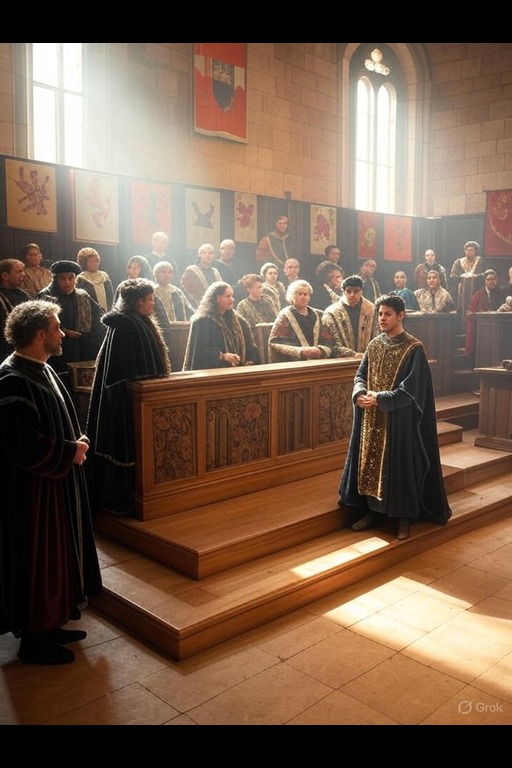
A League of city-states where each maintains autonomy while cooperating under a shared governance framework, this structure balances local interests with collective strength.
Universal
Biomes
Politics
Alignments
Races
Resources
Classes
Elevations
Religions
World
No accessible MAPs found.
Biome
Politics
Alignment
Race
Resource
Class
HeightMap
League
Detailed Description
In a League of city-states, individual municipalities unite to form a cooperative governance structure that allows for shared security and economic benefits while respecting local autonomy. Power is typically distributed among the member states, with each city-state sending representatives to a central council that discusses common policies and resolves disputes. This council, often referred to as the Conclave, plays a crucial role in maintaining harmony and facilitating communication between the diverse interests of the member states. Each representative wields influence proportional to their city's size and resources, which can lead to power imbalances that create tension within the alliance. Succession and leadership within the League can vary significantly depending on the customs of each city-state. Some may have hereditary systems, while others might employ a meritocratic approach, where leaders are elected based on their capabilities or contributions to the community. Often, leaders serve fixed terms, but in some cases, they may be removed through a consensus of the other representatives if their governance is deemed unsatisfactory. This creates a dynamic environment where political maneuvering and diplomacy are essential, as alliances can shift rapidly based on the interests of the member cities. The typical institutions of a League include councils focused on military coordination, trade agreements, and public welfare initiatives, all aiming to enhance the interdependence of the member states. Taxation policies are often negotiated collectively, which can lead to tension as wealthier states may resist contributing more to the common coffers, while poorer states seek increased support. This taxation system can foster resentment and spark discussions about equity and fairness, as cities with differing economic conditions may have contrasting views on their contributions. Military functions are generally decentralized; each city-state maintains its own militia while contributing to a joint defense force that acts in the face of external threats. Religious institutions often play a significant role in society, providing ethical guidance and a shared cultural identity that can either unite or divide the member states. Daily life for citizens within a League of city-states is characterized by both a sense of local pride in their city’s unique identity and an awareness of their interconnectivity with neighboring communities, leading to a rich tapestry of cultural exchange and occasional rivalry. While the League can foster cooperation and mutual aid, it also faces challenges, such as the potential for local interests to overshadow the collective good. Internal disputes and regional rivalries may complicate decision-making, while differing values and governance styles can lead to friction among members. Ultimately, the experience of living under a League is one of balancing local autonomy with the benefits and burdens of being part of a larger political entity.
Examples
A prosperous coastal city pushes for trade reforms that neighboring states oppose. A smaller city-state champions environmental regulations, clashing with industrial interests from larger member states. An ambitious representative seeks to centralize power within the Conclave, igniting debates about autonomy. Citizens rally for a unified military response against marauding forces threatening the borders. A religious festival in one city-state sparks tensions over cultural appropriation among neighboring communities.