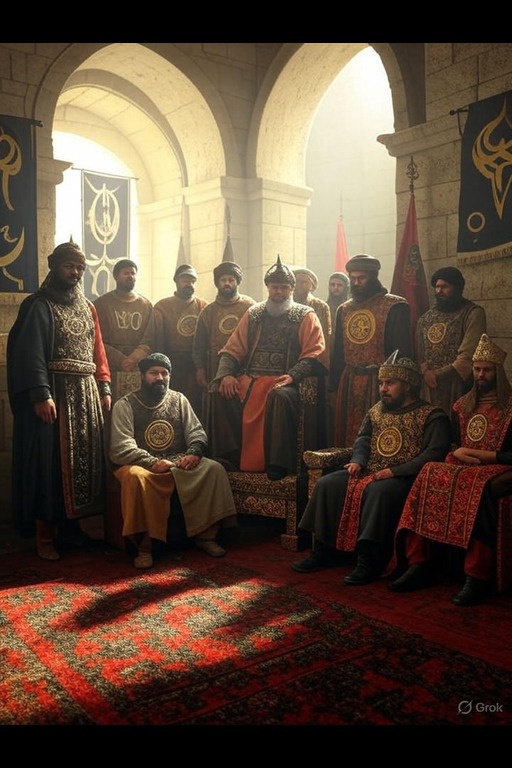
A Khaganate is a centralized monarchy led by a supreme khan, often ruling over diverse tribes or clans, with a focus on feudal loyalty and military strength.
Universal
Biomes
Politics
Alignments
Races
Resources
Classes
Elevations
Religions
World
No accessible MAPs found.
Biome
Politics
Alignment
Race
Resource
Class
HeightMap
Khaganate
Detailed Description
In a Khaganate, power is concentrated in the hands of the khan, who is considered both a political and military leader. This position often arises from a combination of hereditary succession and martial prowess, with the khan's authority legitimized by tradition and the support of influential clans. Succession is typically passed down through bloodlines, though the khan may also designate a favored successor, allowing for potential conflict among rival claimants. The khan's influence is maintained through a network of loyal noble families, each overseeing their territories and answering directly to the khan, ensuring a blend of local governance and central authority. The council of nobles, often referred to as the ‘Kurultai,’ plays a significant role in decision-making, especially regarding military campaigns, resource allocation, and relations with neighboring entities. This assembly, comprising representatives from various clans, convenes periodically to address legislative matters and advise the khan, although the ultimate power remains with the ruler. Laws within the Khaganate are often unwritten and based on customary traditions, with disputes resolved through a mixture of tribal consensus and the khan’s decrees. Taxation is generally levied in the form of tribute or resources, reinforcing loyalty, while local lords manage the collection process, sometimes leading to frictions if tribute levels become burdensome. Daily life under a Khaganate varies significantly, with the experiences of the common folk shaped by their specific clan allegiances and proximity to the khan's court. While the khan's rule can provide stability and protection against external threats, it may also lead to exploitation by ambitious nobles seeking personal gain. The complexities of loyalty can create tensions, as local leaders vie for favor while also dealing with the needs and grievances of their people. Religious institutions may also hold sway, serving to reinforce the khan's authority while providing spiritual guidance to the populace, yet their influence can also lead to struggles for power if they challenge the khan's directives. Overall, the Khaganate system integrates the strength of centralized authority with the need for localized governance, reflecting a delicate balance between unity and diversity amid its varied tribes and clans.
Examples
A khan faces a rebellion from a disgruntled clan leader who demands more autonomy. A merchant caravan seeks protection from raiders in exchange for tribute to the khan. An ambitious noble attempts to sway the Kurultai in hopes of securing a marriage alliance with the royal family. A village grapples with excessive taxation imposed by a local lord loyal to the khan. A shaman rises in prominence, advocating for the spiritual needs of the tribes while challenging the khan's temporal authority.