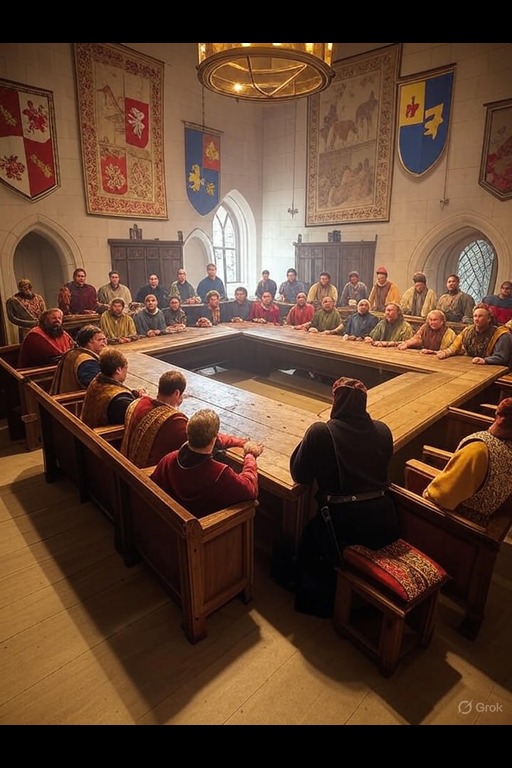
This provincial governance structure embodies a blend of local autonomy and overarching authority, shaped by the cultural and political context of its parent state.
Universal
Biomes
Politics
Alignments
Races
Resources
Classes
Elevations
Religions
World
No accessible MAPs found.
Biome
Politics
Alignment
Race
Resource
Class
HeightMap
Island
Detailed Description
Governance within this provincial framework often features a mix of local officials and representatives from higher authorities, reflecting the balance of power between the province and its overarching state. Typically, a council composed of elected representatives or appointed nobles oversees the implementation of laws and administration. These councils may address local issues such as trade regulations, taxation, and public welfare while adhering to the broader directives established by the parent state. The authority of these councils can fluctuate based on the political climate, with some provinces enjoying greater autonomy under a kingdom or empire, while others may face stricter oversight in federations or theocracies. The process of succession in leadership within this provincial structure varies significantly depending on the nature of the parent state. In kingdoms, hereditary succession may dictate the appointment of a provincial governor or lord, whereas in a republic, elections may determine leadership positions. In federations, there can be a blend of both systems, with local assemblies electing representatives who then select a governor. The governance model may also incorporate religious figures, especially in theocracies, where spiritual leaders may wield significant influence over both governance and societal norms, impacting the daily lives of the inhabitants. The social impact of this governance structure is nuanced, often creating a duality in the lives of citizens. Those who benefit from local representation may experience a greater sense of community involvement, while others may feel the weight of taxation or laws imposed by distant authorities. Periodic conflict can arise between the desires of the provincial populace and the mandates of the central government, leading to civil unrest or demands for reform. Citizens might find themselves entangled in political struggles, with factions emerging based on loyalty to local leaders versus allegiance to the larger state structure. As a result, the experience of governance within this province can be deeply felt in the daily lives of its people, shaping their identities and interactions within the broader political landscape.
Examples
A duchy within a kingdom struggles to maintain its traditional privileges amid centralizing reforms. A governorate in an empire faces a rebellion sparked by heavy taxation on local trade. A canton in a federation advocates for increased autonomy through a coalition of local guilds. An eparchy in a theocracy finds itself at odds with the ruling clerics over land use and agricultural policies. A province in a republic experiences a shift in power as the populace demands greater accountability from elected officials.