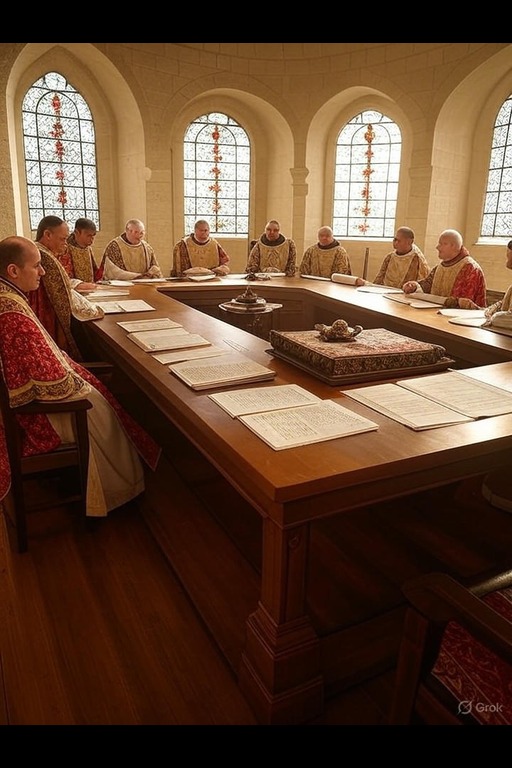
In a Holy State, governance intertwines with religious authority, wherein leaders are chosen through divine sanction, influencing law, culture, and social life, often creating a unified yet complex power structure.
Universal
Biomes
Politics
Alignments
Races
Resources
Classes
Elevations
Religions
World
No accessible MAPs found.
Biome
Politics
Alignment
Race
Resource
Class
HeightMap
Holy State
Detailed Description
In a Holy State, the governance system is deeply intertwined with religious principles, creating a unique authority structure where leaders derive their legitimacy from divine sources. The ruling body is typically composed of high-ranking clergy or religious leaders who interpret sacred texts and serve as both spiritual guides and political authorities. This dual role often results in a governance style that prioritizes moral and ethical considerations in lawmaking, ensuring that the populace adheres to the tenets of the faith. Power is usually centralized within a council of senior clerics, who may be elected, appointed, or confirmed through sacred rites, depending on the traditions of the specific faith practiced. Succession within a Holy State is often guided by a combination of divine appointment and hereditary principles. Leaders may be selected based on their perceived holiness or merit, but bloodlines of prominent religious figures can also play a crucial role in the process. This creates a dynamic where both meritocracy and aristocracy coexist, leading to possible tensions between those seeking reform and traditionalists resistant to change. The laws enacted under such a system often reflect the moral and ethical imperatives of the dominant faith, influencing everything from property rights to social conduct and public gatherings. Typical institutions within a Holy State include ecclesiastical courts that adjudicate legal matters in line with religious doctrines. These courts hold significant sway over civil disputes, and their decisions can reflect the moral compass of the society. Taxation systems, likewise, may be infused with religious obligations, where a portion of the populace’s wealth is allocated to support religious institutions and their various functions, such as education and charity. This reliance on religious funding can bolster social cohesion while also prompting grievances among those who feel unfairly burdened or excluded from the benefits. Life under a Holy State can vary dramatically based on one's alignment with the dominant faith. Adherents often enjoy privileges and protections under the law, while dissenters or those of differing beliefs may face discrimination or social ostracism. Festivals and religious observances heavily shape the calendar, with the community often gathered for worship and celebration, reinforcing shared values and traditions. However, the pressure to conform to religious standards can lead to conflicts, especially in diverse populations where multiple belief systems may coexist, creating tensions that challenge the unity of the Holy State.
Examples
A revered abbey influences local governance by appointing council members based on spiritual merit. A conflict erupts when a charismatic preacher challenges the established religious order. The populace organizes a pilgrimage to express their grievances against the ruling clergy. An outsider’s arrival sparks debates about religious tolerance within the Holy State. The ruling council struggles to balance ancient traditions with the demands of a changing society.