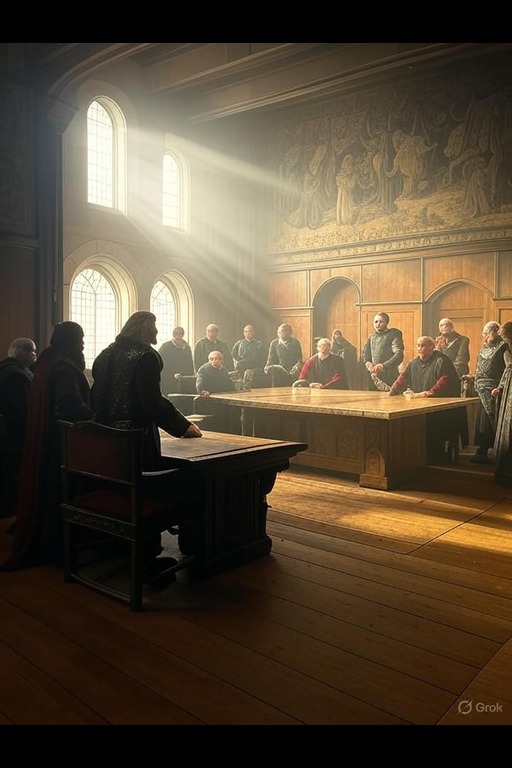
In a Free Territory, power frequently shifts among competing factions; governance is marked by absence of a central authority, leading to a fluid social landscape shaped by local alliances and informal agreements.
Universal
Biomes
Politics
Alignments
Races
Resources
Classes
Elevations
Religions
World
No accessible MAPs found.
Biome
Politics
Alignment
Race
Resource
Class
HeightMap
Free Territory
Detailed Description
In a Free Territory, the lack of centralized governance fosters a landscape where various factions vie for influence and control. Power is often derived from local leaders, influential merchants, or charismatic individuals who can rally support through personal loyalty rather than formal institutions. This decentralized structure means that succession is not determined by hereditary lines or established laws but rather through demonstrations of strength, cunning, or ability to forge alliances. As such, leadership can change rapidly, leading to a volatile but dynamic political environment where citizens must constantly navigate shifting loyalties and power balances. The absence of a uniform legal framework means that laws often emerge organically, dictated by the customs and shared agreements of local communities. This can create a rich tapestry of local traditions but can also lead to confusion and conflict when neighboring territories uphold differing codes of conduct. Taxation is typically minimal and often voluntary, with local leaders appealing to the goodwill of their constituents to fund communal projects or defense efforts. The reliance on informal agreements can result in a patchwork of services and protections, leading to disparities in the quality of life experienced by residents in various regions. Socially, citizens in a Free Territory may enjoy a high degree of personal freedom, but this is counterbalanced by the constant threat of conflict between rival factions. Daily life is marked by a sense of unpredictability, as the balance of power can shift with little warning. Communities may band together for mutual protection, forming militias or trade alliances, while others may choose to remain isolated, leading to a diverse range of living conditions and societal norms. While the lack of overarching authority can inspire innovation and local governance, it equally invites challenges, such as disputes over resources or territory, and the potential for exploitation by more powerful factions. This duality shapes the experience of those living within a Free Territory, where collaboration and competition coexist in a delicate equilibrium.
Examples
A trade guild establishes its own laws, leading to conflicts with neighboring territories over resource management. A charismatic leader rises to power by uniting various clans against a common external threat. Local farmers band together to form a cooperative, challenging the established merchant class. A group of adventurers helps mediate disputes between rival factions, becoming influential peacekeepers. A once-quiet village forms a militia in response to the rising tension between two powerful warlords. A council of elders attempts to maintain peace amid escalating rivalries, risking their own safety.