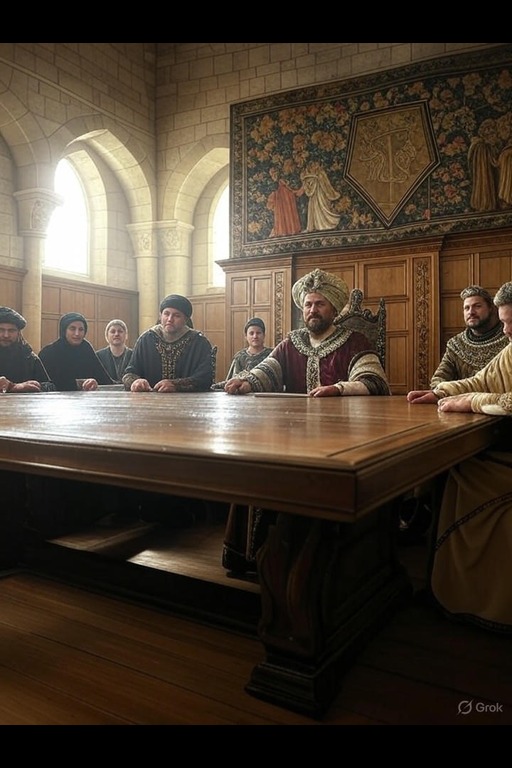
An emirate is a form of monarchy where power is held by an emir, often supported by a council of advisors, balancing tradition with the need for effective governance.
Universal
Biomes
Politics
Alignments
Races
Resources
Classes
Elevations
Religions
World
No accessible MAPs found.
Biome
Politics
Alignment
Race
Resource
Class
HeightMap
Emirate
Detailed Description
In an emirate, the emir embodies both authority and tradition, wielding significant power over the administration of the territory. This power is often derived from hereditary lineage, with the title typically passed down through a ruling family. Succession can be a point of contention; while many emirates adhere to primogeniture, some may involve a council of elders or notable figures who influence the choice of the next emir. This council may also serve to balance the emir's power, providing counsel and serving as a link to the populace's concerns and interests. The intricate relationship between the emir and the council is fundamental to the governance of the emirate, as it fosters a sense of shared responsibility, though it may lead to political maneuvering and power struggles behind closed doors. Legal traditions within an emirate often blend local customs with formalized laws, creating a unique legal tapestry. Taxation is typically structured to fund both local and regional needs, with heavier burdens often placed on trade and agricultural outputs. The emirate may have designated officials responsible for collecting taxes and enforcing laws, but the emir retains ultimate authority over judicial matters. Military service might be voluntary or conscripted, often drawing from local populations to defend the emirate's borders and maintain internal peace. Religious leaders may also hold considerable sway in both governance and daily life, as they often influence moral and legal standards. The daily life of subjects in an emirate can be characterized by a blend of stability and unpredictability. On one hand, a strong emir can lead to well-maintained infrastructure and trade routes, enhancing the quality of life for citizens. On the other hand, the whims of the emir or conflicts among the ruling class can lead to abrupt changes in policy or taxation, creating uncertainty. The effectiveness of the council and the degree to which it represents the populace can also greatly impact everyday experiences, as more inclusive councils might foster a sense of community and shared purpose, while exclusive ones could breed resentment and unrest. Furthermore, subjects may find themselves caught between traditional practices upheld by the emir and the evolving demands of a changing world, leading to a dynamic yet often tense societal landscape.
Examples
A caravan route guarded by local militias seeks the emir's blessing for trade expansion. A faction within the council pushes for reforms that challenge traditional power structures. A drought prompts the emir to impose a temporary tax relief, causing debates among the wealthy. The emir's daughter, trained in diplomacy, seeks to negotiate peace with a neighboring territory. A religious festival draws thousands, highlighting the emir's role as a unifying figure. Political intrigue brews as rival advisors vie for the emir's favor in a time of uncertainty.