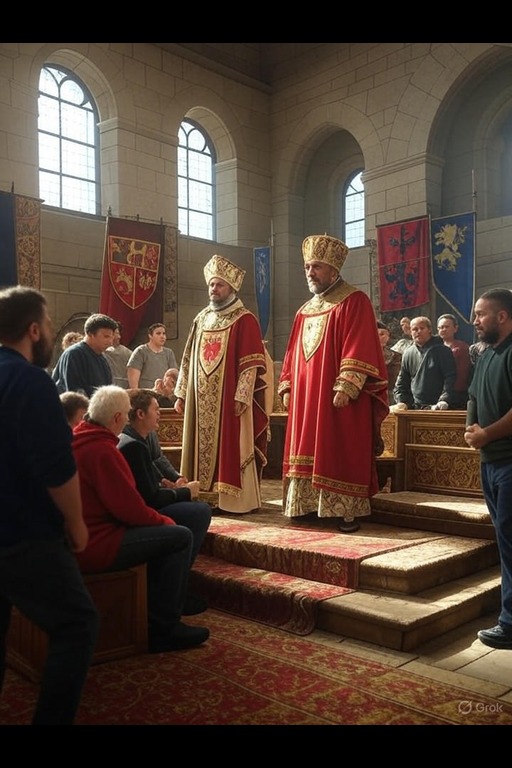
In a diarchy, two leaders share power, often representing distinct factions or interests, creating a unique balance of governance and conflict resolution within the republic.
Universal
Biomes
Politics
Alignments
Races
Resources
Classes
Elevations
Religions
World
No accessible MAPs found.
Biome
Politics
Alignment
Race
Resource
Class
HeightMap
Diarchy
Detailed Description
In a diarchy, governance is shared between two co-rulers, each embodying different political factions, ideologies, or societal interests. This structure is designed to prevent the absolute concentration of power and promote a system of checks and balances. The rulers may be elected from among the populace or appointed by influential councils, with their legitimacy often grounded in the support of specific social groups or regions. Each leader typically has distinct areas of authority, such as military command or economic oversight, allowing them to specialize in managing their respective domains while ensuring collaborative decision-making on national matters. The co-rulers must navigate their relationship carefully, as differing priorities can lead to power struggles or mutual cooperation, depending on the circumstances. Succession often involves a complex process, sometimes requiring both leaders to designate successors from their respective factions or to engage in a shared electoral process to ensure continuity of governance and stability in leadership. This duality can lead to fascinating political dynamics, where compromise and negotiation become essential skills for both rulers and their advisors. In daily life, citizens may experience a mix of stability and strife, depending largely on the effectiveness of their rulers' cooperation. A well-functioning diarchy can lead to innovative policies that reflect the diverse needs of the populace, while a dysfunctional partnership may result in gridlock or conflict, affecting law enforcement and public services. Taxation policies can vary significantly, as each leader may advocate for different economic strategies based on their ideological leanings, leading to occasional disputes over fiscal priorities. Furthermore, the need for public approval often drives both leaders to engage with their constituents, fostering a vibrant civic culture where debates and political discourse flourish in local assemblies and gatherings. Citizens may feel empowered to voice their concerns and influence policy, but they also face the risks of partisan conflict spilling into their daily lives, creating divisions within communities. The balance of power can shape military strategies, where each leader may command their own forces or collaborate in defense efforts against external threats. Religious institutions can also play a pivotal role, acting as mediators in conflicts or as supporters of one ruler over another, influencing public sentiment and political alignments. In essence, the diarchic structure provides a fascinating lens through which the complexities of governance, societal engagement, and power dynamics unfold, shaping the experiences of all who live under its rule.
Examples
A merchant guild voices concern over trade regulations differing between the two rulers. A diplomatic envoy from a neighboring state seeks to exploit the rivalry for leverage. A local festival is organized to celebrate the anniversary of the diarchy, drawing crowds from opposing factions. A factional leader struggles to gain the support of common folk amid rising tensions between the co-rulers. A military skirmish occurs as one leader's forces clash with the others' loyalists over territorial disputes.