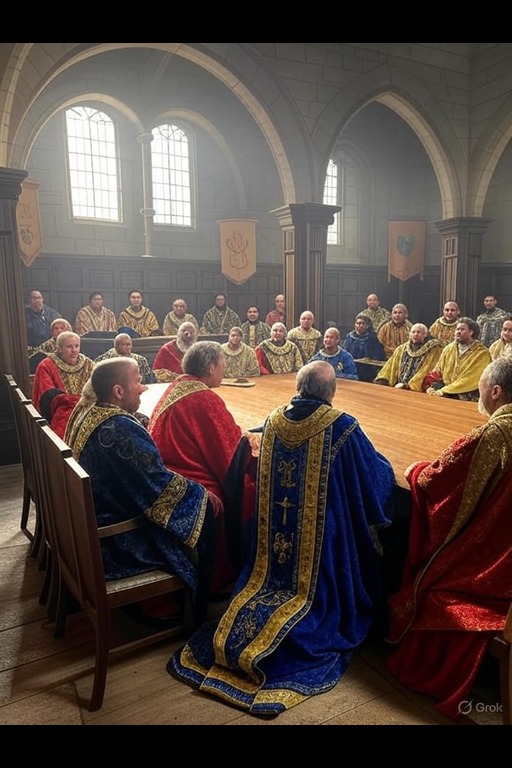
A provincial governance structure where local leaders exert authority, shaped by the influence of the overarching parent state, creating a blend of autonomy and obligation.
Universal
Biomes
Politics
Alignments
Races
Resources
Classes
Elevations
Religions
World
No accessible MAPs found.
Biome
Politics
Alignment
Race
Resource
Class
HeightMap
Dependency
Detailed Description
In a provincial governance structure, local leaders wield significant authority, often derived from either hereditary rights or appointment by a higher power. This authority is frequently buttressed by the consent of the governed, as provincial leaders are expected to reflect the values and interests of their communities. The balance of power typically hinges on the nature of the overarching state, whether it be a kingdom, empire, federation, theocracy, or republic. Each context presents its own nuances regarding the extent of autonomy, legislative powers, and the nature of succession. Successions often occur through established customs, with heirs of noble houses or appointed successors taking charge in kingdoms and empires. In federations, elected representatives might ascend to leadership, while in theocracies, religious figures could be chosen based on divine guidance or clergy consensus. The specifics of governance impact daily life, including taxation, law enforcement, and community defense, with provincial budgets often reliant on allocations from the central authority or local levies, which can lead to tensions regarding resource distribution. Institutions such as councils or assemblies may exist to advise provincial leaders, allowing for public participation and local governance. However, the effectiveness of these institutions varies widely; in some cases, they may be mere ceremonial bodies, while in others, they hold substantial legislative power that can challenge or resist central authority. Residents often navigate a complex landscape of obligations to both their provincial leaders and the overarching government, which can lead to a duality in loyalty and identity that shapes community relations and interactions with neighboring provinces. The typical impact on social dynamics within such a governance structure is one of both cooperation and contention, as local leaders strive to meet the needs of their populace while maintaining favorable relations with higher authorities. This delicate balancing act can result in vibrant local cultures or tensions that threaten stability, as the push and pull between autonomy and obligation continually shape the identity of the province and its peoples.
Examples
A barony within a kingdom struggles to maintain its traditions amid demands for central reforms. A governorate in an empire faces resistance from local merchants over new taxation laws. A canton in a federation experiences a surge in local power as elections draw near. An eparchy in a theocracy sees its religious leaders clashing with secular interests over land use. A province in a republic grapples with the influence of neighboring territories in its political affairs.