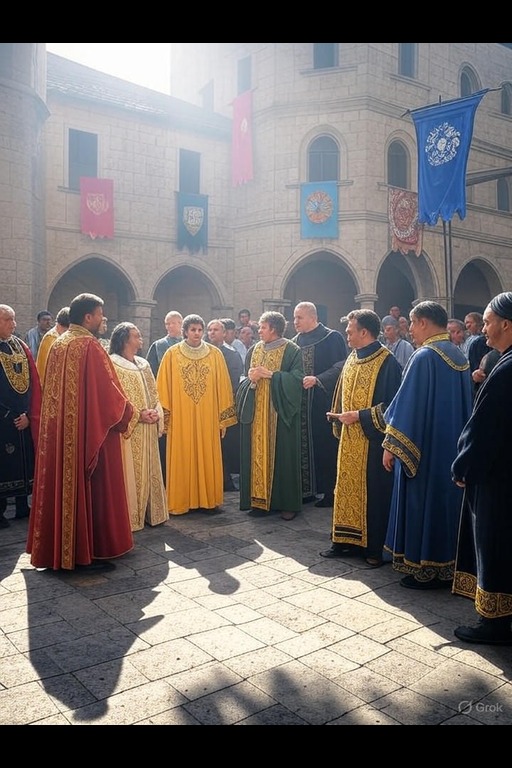
In a provincial democracy, power is vested in elected representatives who strive to reflect the will of their constituents while navigating local and regional complexities.
Universal
Biomes
Politics
Alignments
Races
Resources
Classes
Elevations
Religions
World
No accessible MAPs found.
Biome
Politics
Alignment
Race
Resource
Class
HeightMap
Democracy
Detailed Description
In this political structure, the governance of the province is firmly rooted in democratic principles, with citizens participating in the election of their leaders. Power is distributed among various elected officials, including a governor, regional council members, and local magistrates. The governor often serves as the face of provincial authority, overseeing the implementation of laws, managing public services, and representing the province in broader political discussions. Succession typically occurs through regular electoral cycles, ensuring that officials remain accountable to the populace. However, the process may be influenced by local factions, political alliances, and the occasional whisper of outside interference, complicating the peaceful transition of power. The council, comprised of representatives from different districts, plays a crucial role in legislative processes. Councils convene to discuss regional issues, propose new laws, and allocate resources. Their debates can be spirited, often reflecting the diverse viewpoints of the populace, and the decisions they reach can have profound impacts on daily life. The law is shaped not only by these councils but also through public referendums, where citizens can vote directly on significant issues, fostering a sense of involvement and responsibility among the electorate. Taxation, while necessary for maintaining infrastructure and services, may also become a contentious topic, with citizens frequently questioning the fairness of tax burdens. While the democratic structure promotes civic engagement, it is not without its pitfalls. Political corruption can arise, with some leaders prioritizing personal gain over the common good. Additionally, the influence of powerful interest groups or wealthy citizens can skew representation, leading to frustrations among ordinary folk who feel their voices are drowned out. These tensions manifest in public protests, spirited debates in taverns, and occasional clashes at council meetings. Local governance often finds itself at the intersection of idealism and practicality, where the aspirations of democracy wrestle with the realities of human ambition. Daily life under this provincial democracy can vary widely. Citizens may feel empowered to participate in governance, attend town hall meetings, and voice their concerns. Yet, they may also experience disillusionment if they perceive that their needs go unaddressed or if they feel marginalized by dominant factions. As they navigate this complex landscape, individuals become acutely aware of the power dynamics at play within their community, shaping their understanding of what it means to be a citizen in a democratic society.
Examples
A recently elected council faces a backlash over proposed tax increases aimed at funding education. An influential merchant uses his wealth to sway council votes, igniting local protests. A grassroots movement emerges, advocating for a more equitable distribution of public resources. A popular governor becomes embroiled in a scandal, sparking debates about corruption within the administration. Residents rally to challenge an unpopular law, hoping to overturn it through a public referendum. A charismatic leader rises from the ranks of the council, promising to unite fragmented districts under a shared vision.