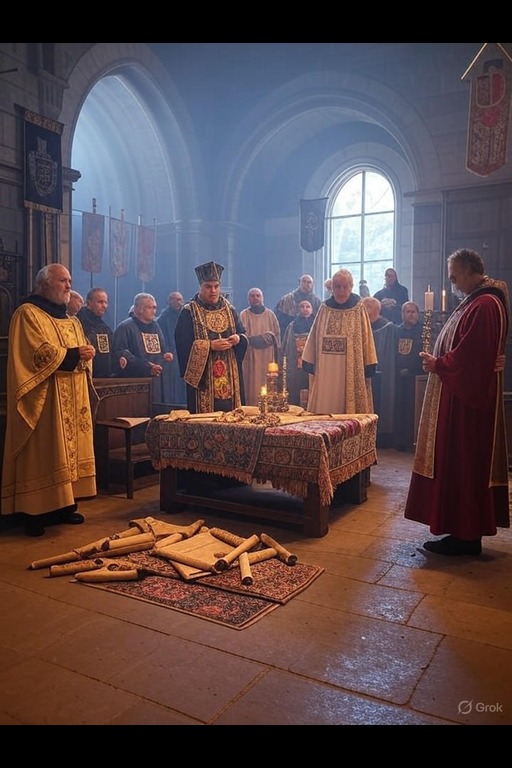
The governance of a deanery is characterized by ecclesiastical leadership, often influenced by local traditions and the broader political landscape, ensuring alignment with spiritual authority and community values.
Universal
Biomes
Politics
Alignments
Races
Resources
Classes
Elevations
Religions
World
No accessible MAPs found.
Biome
Politics
Alignment
Race
Resource
Class
HeightMap
Deanery
Detailed Description
In a deanery, governance typically centers around a dean who wields significant spiritual and administrative authority. This individual is often elected or appointed from among high-ranking clergy, reflecting both religious standing and community respect. The dean oversees not only spiritual matters but also daily administration, including taxation, law enforcement, and community welfare. In instances where the deanery operates under a monarchy or a federation, the authority of the dean may be complemented or constrained by the secular rulers, leading to a dynamic interplay of power that can shape local governance. Succession within a deanery often follows a pattern of ecclesiastical appointment, where the next dean is chosen based on merit, seniority, or election by a council of clerics. In more centralized systems, the appointment may involve higher ecclesiastical authorities or even the ruling monarch, which can introduce complexities such as political influence or favoritism. The degree of autonomy enjoyed by the deanery varies widely; under a kingdom, the dean may have substantial leeway in local matters, while in a theocratic framework, they could be directly accountable to a higher religious authority, causing the community to navigate the duality of spiritual and temporal loyalty. Typical institutions within the deanery might include a council of elders or a synod, which advises the dean on community issues and religious matters. Depending on the local laws, these councils may have varying degrees of power to influence decision-making. Taxation tends to align with both the needs of the local populace and the mandates of the overarching authority, whether that be a monarchy, an empire, or a theocratic structure. This fusion of governance often leads to challenges, as the populace may feel the strain of dual obligations to spiritual and secular demands, complicating their daily lives. Residents often experience a blend of spiritual guidance and administrative oversight that can enrich community life but also impose obligations. Festivals, religious observance, and community gatherings are typically organized under the dean’s direction, fostering a strong connection among local inhabitants. However, dissent may arise, particularly when new edicts clash with established traditions, or when external pressures from a ruling body disrupt the balance of power within the deanery. The interplay of ecclesiastical authority and local custom creates a nuanced tapestry of governance that shapes the identity of the community.
Examples
A deanery within a kingdom faces tension as the crown demands increased taxation to fund a distant war. A province in a republic enjoys relative autonomy, allowing the dean to innovate educational programs that reflect local values. An eparchy in a theocracy struggles to maintain independence as higher religious authorities impose stringent regulations. A governorate in an empire sees its dean negotiating privileges with the central government to protect cultural practices. A duchy under a feudal system witnesses a power struggle between the dean and local nobility over land use and community resources.