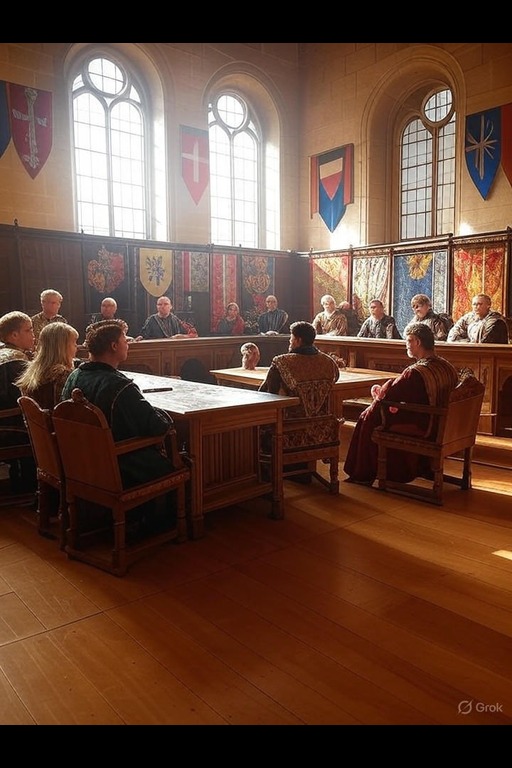
A conglomerate forms a union of multiple nations, sharing governance while preserving distinct customs, leading to cooperative decision-making and diverse representation.
Universal
Biomes
Politics
Alignments
Races
Resources
Classes
Elevations
Religions
World
No accessible MAPs found.
Biome
Politics
Alignment
Race
Resource
Class
HeightMap
Conglomerate
Detailed Description
In a conglomerate political structure, authority is shared among the member nations, each contributing to a collective governance system while maintaining their unique identities. Power dynamics typically see a central council composed of representatives from each nation, ensuring that all voices are heard in the decision-making process. This council is often tasked with overseeing collective laws, trade agreements, and matters of defense, striking a balance between cooperation and autonomy. Each nation retains its local governance, allowing for a tapestry of legal systems and cultural practices to coexist under the broader framework of the conglomerate constitution. Succession within this structure can vary widely. In some cases, leadership positions within the central council rotate among member nations, promoting unity and equitable representation. In others, nations may elect a representative based on principles of merit or seniority. The intricacies of these processes can lead to power struggles, especially if a dominant nation seeks to exert more influence over collective decisions. It is not uncommon for smaller nations to band together for protection against perceived encroachments, resulting in shifting alliances that can complicate governance. Taxation and resource distribution are handled collaboratively, with member nations contributing according to their capabilities. This can lead to grievances if wealthier nations feel burdened by the needs of less prosperous members, or if some nations feel they are not receiving their fair share of resources. The presence of multiple legal systems can create confusion, especially in border regions, where differing laws may apply. Daily life in a conglomerate is often marked by a blend of local traditions and overarching regulations, prompting citizens to navigate a complex landscape of cultural identities. While the cooperative nature of the conglomerate can foster innovation and cultural exchange, it can also lead to friction. Disputes over resource allocations, representation, and individual autonomy are common. The presence of multiple languages, customs, and political agendas can enrich society, yet may also sow discord among member nations, necessitating constant dialogue and negotiation to maintain harmony. Citizens often experience a sense of dual identity, where loyalty is split between their local nation and the larger collective, influencing their participation in civic life and social interactions.
Examples
A trade treaty between two nations sparks protests in a border town. A shared military force is called to quell unrest caused by resource allocation disputes. A cultural festival held in the capital showcases the diverse traditions of member nations. An election for the council leadership leads to unexpected alliances forming among rival nations. A minor nation appeals to the council for aid after a natural disaster, revealing disparities in support. Tensions rise when a larger nation attempts to impose its laws on smaller members.