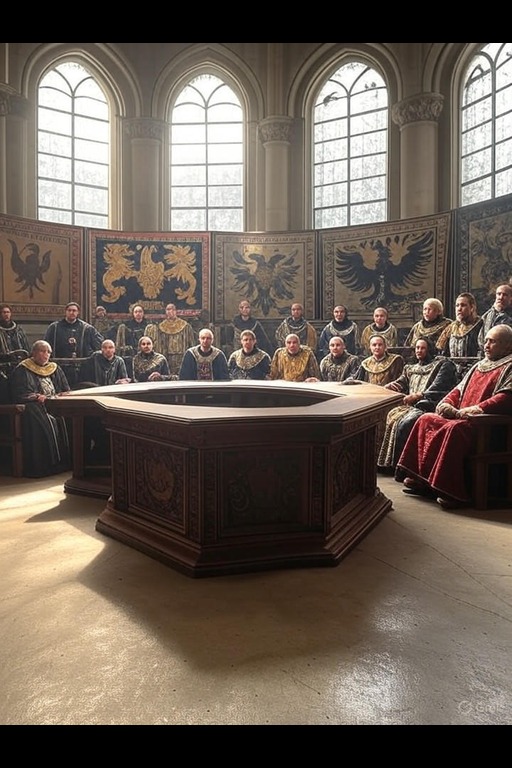
Clan governance emphasizes kinship ties and communal decision-making, where local leaders wield influence rooted in ancestral traditions and consensus-building.
Universal
Biomes
Politics
Alignments
Races
Resources
Classes
Elevations
Religions
World
No accessible MAPs found.
Biome
Politics
Alignment
Race
Resource
Class
HeightMap
Clan
Detailed Description
In clan-based governance, power is typically held by a council of elders or a chieftain who derives authority from lineage and the collective agreement of community members. This system often thrives on the principles of kinship and shared heritage, with leaders expected to act in the best interests of their clans while maintaining harmony and balance within the community. Succession is usually determined by blood ties or the selection of a successor through communal consensus, respecting traditions that have been passed down through generations. In some contexts, such as under a kingdom, the clan may hold considerable autonomy while still adhering to the overarching authority of a monarch, whereas in an empire, clans might serve as semi-autonomous units that manage local affairs under the auspices of a central imperial power. In federations, the relationship can shift dramatically, with clans often retaining significant legislative influence while also navigating the broader political currents that shape their governance. Conversely, in a theocracy, the clan system may intertwine with religious authority, placing spiritual leaders alongside traditional chieftains, thus influencing decision-making through faith and doctrine. The institutions governing clan affairs often include councils that convene regularly to discuss matters ranging from resource allocation to conflict resolution. These councils enable communal participation, ensuring that various voices within the clan are heard, though the balance of power can sometimes skew towards more vocal or influential members. Taxation can also be communal in nature, relying on shared resources, and often takes the form of goods or services rather than coinage, further entrenching the bond of mutual support among members. Socially, life within a clan can be deeply interwoven with traditions and rituals, fostering a strong sense of identity and belonging. However, challenges can arise, particularly in terms of external pressures from larger political entities, which may seek to impose their will on clan affairs, leading to potential conflicts over autonomy and cultural preservation. As clans navigate these dynamics, they often find themselves at the intersection of tradition and modernity, striving to uphold their heritage while adapting to changing circumstances.
Examples
A border clan within a kingdom fiercely defends its territory against encroaching outsiders. A council of clans in an empire negotiates trade agreements that benefit their shared interests. A confederation of clans in a federation seeks greater recognition of their cultural rights. A clan under a theocracy must balance religious edicts with ancestral customs during festival seasons. A democratic province governed by its clan leaders organizes elections to select representatives for regional forums.