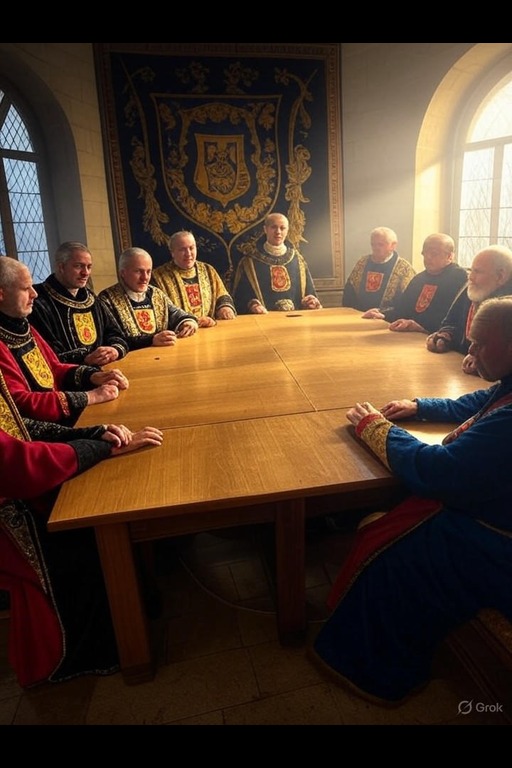
Chiefdoms represent a hierarchical, kin-based political structure where leadership is typically held by a chief, influencing governance and social organization within provinces.
Universal
Biomes
Politics
Alignments
Races
Resources
Classes
Elevations
Religions
World
No accessible MAPs found.
Biome
Politics
Alignment
Race
Resource
Class
HeightMap
Chiefdom
Detailed Description
In a chiefdom, power is vested in a single chief, usually selected from a prominent family or lineage, who serves as both a political leader and a ceremonial figurehead. The chief's authority is often reinforced by kinship ties, with the loyalty of the community hinging upon shared ancestry and social connections. Governance typically involves the establishment of councils comprised of trusted advisors and elders, who assist the chief in decision-making and conflict resolution. These councils may vary in their influence depending on the specific cultural context, with some serving as mere advisory bodies while others hold significant sway over local matters. Succession within a chiefdom often follows hereditary lines, where the chief's offspring or designated kin are expected to assume leadership roles. However, in some cases, the community may have the power to select a new chief from among eligible candidates, resulting in a blend of dynastic and democratic practices. This can lead to tensions and power struggles, especially if rival factions contest rightful claims to leadership. The chief's ability to maintain support from the populace is crucial, as their legitimacy often relies on their capacity to provide stability, security, and prosperity. Chiefdoms might also hold varying degrees of autonomy based on their relationship with larger political entities, such as kingdoms, empires, or federations. Under a kingdom, for instance, a chiefdom may retain significant control over local affairs while submitting to overarching laws and taxes imposed by the monarch. In an empire, chiefs may be granted certain privileges to govern their people but must align their policies with imperial interests. Conversely, in federations, the balance of power could shift, allowing chiefdoms more autonomy in governance while being accountable to a central authority. Socially, life under a chiefdom reflects strong kinship bonds and communal responsibilities. The chief often mediates disputes and enforces customary laws, which might be unwritten but are deeply ingrained in local tradition. Taxation is typically collected in the form of produce or labor, reinforcing the chief's status as a provider for the community. While such systems foster unity and cooperation, they can also lead to inequities, as favoritism towards certain families can create divisions. Ultimately, the experience of daily life in a chiefdom is shaped by the chief's governance style, the strength of social ties, and the prevailing cultural norms surrounding leadership and communal obligations.
Examples
A border province within a kingdom struggles to assert its traditions against the central authority's reforms. In an empire, a chief governs a remote territory, balancing imperial demands with local customs. A federation's canton enjoys unique autonomy while navigating inter-tribal negotiations. An eparchy in a theocracy relies heavily on the chief's spiritual legitimacy to maintain order among its followers. A republic's province contests the chief's decisions through popular assemblies, challenging established norms. A chiefdom nestled in a vast kingdom cultivates alliances with neighboring tribes to secure trade routes.