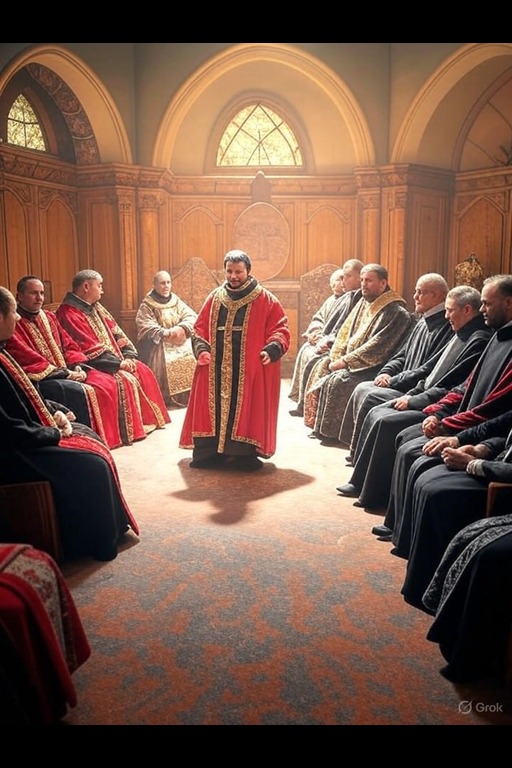
A Brotherhood theocracy intertwines governance with spiritual leadership, characterized by councils of clergy guiding civic life, with power derived from divine mandate and communal faith.
Universal
Biomes
Politics
Alignments
Races
Resources
Classes
Elevations
Religions
World
No accessible MAPs found.
Biome
Politics
Alignment
Race
Resource
Class
HeightMap
Brotherhood
Detailed Description
In a Brotherhood theocracy, the source of power is deeply rooted in religious beliefs and practices. Leading figures, often referred to as the High Brothers or Sisters, are viewed as the chosen intermediaries between the divine and the populace. Their authority is typically established through a mixture of spiritual conviction and communal recognition, with leadership often passed down through familial lines or determined by consensus among existing clergy. This method of succession can lead to tensions if factions within the Brotherhood vie for influence, particularly if a leader's divine favor is called into question by competing sects or interpretations of doctrine. Decision-making occurs within councils that are composed of senior clergy, usually organized by rank and specialization. These councils address both spiritual and temporal matters, often leading to a complex intertwining of governance and faith. Local congregations maintain significant autonomy, governed by smaller councils that relay their concerns to higher echelons. This structure can result in a rich tapestry of local customs and traditions, albeit sometimes at odds with the overarching doctrines of the central authority, creating potential for conflict or schism. The law within a Brotherhood theocracy often reflects the tenets of the faith, with legal codes derived from sacred texts or divine revelations. Punishments and rewards may be seen as reflections of moral standing rather than merely legal infractions, with adherence to the faith regarded as paramount. Taxation typically takes the form of tithes or offerings deemed necessary for the upkeep of the community and its institutions. The populace may experience a sense of belonging and purpose through participation in these rituals, though dissenters can find themselves marginalized or pressured to conform. The role of the military in a Brotherhood theocracy is often entwined with religious duty. Those who serve may be viewed as holy warriors or protectors of the faith, tasked with safeguarding the tenets and territories of their belief system. This conflation of military service and spiritual duty can lead to strong communal ties, but also to militaristic fervor that might escalate into conflict with neighboring regions or rival factions. Daily life under such a regime can foster a strong sense of community and shared purpose among adherents, yet it can also create an atmosphere of surveillance and control, where deviation from orthodoxy is met with scrutiny. The balance between spiritual zeal and social welfare remains delicate, with the potential for both uplifting the populace and stifling dissenting voices depending on the governance style of the ruling Brotherhood.
Examples
A village led by a High Sister grapples with an influx of heretical ideas challenging their longstanding traditions. A rival sect seeks to usurp control of a pivotal trade route deemed sacred by the Brotherhood. The annual festival of devotion draws vast crowds, showcasing the unity and fervor of the faithful. A charismatic preacher incites a movement for reform within the Brotherhood, threatening the established hierarchy. A distant province falls into disarray as the absence of a High Brother creates a power vacuum filled by ambitious clerics.