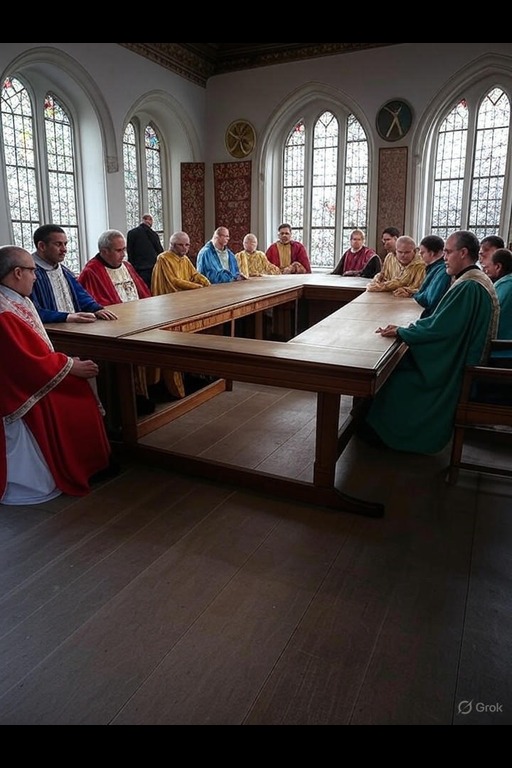
A bishopric is a theocratic governance structure where religious leaders wield significant political power, often intertwining faith with civic administration to guide the populace in both spiritual and secular matters.
Universal
Biomes
Politics
Alignments
Races
Resources
Classes
Elevations
Religions
World
No accessible MAPs found.
Biome
Politics
Alignment
Race
Resource
Class
HeightMap
Bishopric
Detailed Description
In a bishopric, authority primarily rests with an elected or appointed bishop, who serves as both a spiritual leader and a political figure. This dual role often allows the bishop to legislate and enforce laws that reflect the religious doctrine, thereby intertwining the sacred and the secular. The succession of power typically occurs through ecclesiastical channels, where the appointment of a new bishop is often determined by a council of senior clergy or through a broader electoral process among the faithful. This method ensures that the leadership remains closely tied to the tenets of the faith while also allowing for community involvement in governance. The governmental structure usually comprises various ecclesiastical councils or synods, which advise the bishop on matters of policy, justice, and administration. These bodies can often influence local laws, taxation, and resource allocation, reflecting the priorities and beliefs of the religious community. Taxation may be levied not only for public works and services but also as tithes or offerings to support the church's operations. Citizens might find their daily lives deeply affected by these policies, as religious observance often dictates the rhythm of social life, public holidays, and community events. While the spiritual guidance provided by the bishopric can foster a strong sense of community and shared values, it may also lead to tensions, particularly among those whose beliefs differ from the dominant faith. Minority groups might experience marginalization, leading to social unrest or calls for reform. Additionally, the intertwining of religious and political power can create conflicts of interest, particularly if the bishop prioritizes personal or doctrinal agendas over the well-being of the populace. The military role within a bishopric often falls under the jurisdiction of a dedicated religious order or militia loyal to the bishop, tasked with protecting both the faith and the community, which can sometimes lead to militarized enforcement of religious edicts. In daily life, subjects of a bishopric often participate in community rituals and religious observances that reinforce their connection to both their faith and their governance, creating a unique blend of civic and spiritual identity. However, adherence to the prevailing doctrines may also lead to a lack of personal freedom, as dissent could be met with social ostracism or even persecution, affecting how individuals engage with the broader community and its leadership.
Examples
An influential bishop uses divine authority to sanction military campaigns against neighboring territories. A small village petitions for the bishop's intervention after experiencing drought and famine. Clergy members frequently dispute the interpretation of sacred texts, impacting local laws. A faction of laypeople advocates for a more secular council to address issues of governance. Pilgrims traveling to a sacred site generate significant economic activity that benefits local markets.